19 Surprising Childhood Confusions Every Parent Needs to Know About Now
Beyond her work as a parenting expert, Kibler brings personal experience to the challenges of blended-family life. Having successfully parented her own blended family for more than 30 years, she understands firsthand the complexities that can come with combining families, navigating co-parenting, and helping children adjust through major life changes.
Because of this, Celia is offering a free 60-minute training, The Blended Family Reset, on Thursday, July 16, at 8:00 p.m. ET, live on Zoom with a Q&A session. The class is designed for parents who are divorced, separated, co-parenting, or blending a family and want practical guidance on reducing conflict, strengthening relationships, and creating a home where everyone feels connected.

Adults often say “Use common sense” when they believe the answer or appropriate behavior should be obvious. But much of what adults call common sense is knowledge gained through years of experience, observation, mistakes, repetition, and being taught, something kids don’t have. A child may not automatically know that wet shoes make a floor slippery, that placing a glass near the edge of a table makes it easier to knock over, or that leaving a wet towel on a bed will make the bedding damp. Instead of criticizing children for not knowing what seems obvious to us, explain the connection, “Move your glass farther from the edge so it doesn’t get knocked over.” Children are not born with common sense. They develop good judgment through guidance, experience, and practice.

Sometimes children truly do not know better. Other times, they know the rule but cannot consistently apply it yet. A child may remember expectations during a calm moment but struggle when tired, hungry, excited, distracted, embarrassed, frustrated, or emotionally overwhelmed. Knowing something and consistently doing it are two different developmental skills. Instead of assuming defiance, ask, “What happened?” “What made that difficult?” “What can we do differently next time?” Children often need reminders and repeated practice before knowledge becomes a dependable skill.

Children notice the mismatch but may not understand it. Some begin wondering whether they caused the problem or whether they can trust what they are being told.
Clear, age-appropriate honesty is often less stressful, “I’m feeling frustrated right now, but it isn’t your responsibility to fix it. I need a few minutes to calm down.” When our words and behavior match, children feel more secure.

Time is invisible and surprisingly abstract for children. Five minutes may feel like an hour when they are waiting for something exciting. “Next week” may have very little meaning without something concrete to help them understand it. Visual timers can make shorter periods easier to see. Large wall calendars can help children understand longer periods of time. They can cross off days, count how many sleeps remain, and see birthdays, vacations, school events, family visits, or schedule changes approaching. Making time visible can reduce repeated questions, improve patience, and help children feel more prepared.

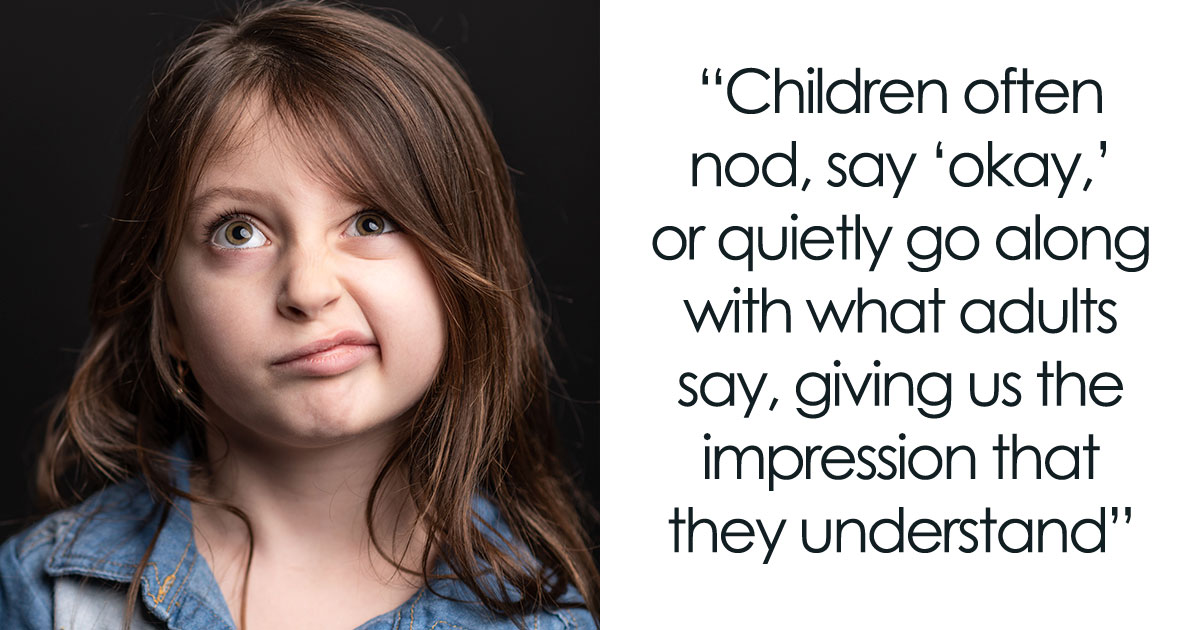
Children sometimes pretend to understand because they do not want to disappoint us, appear incapable, be embarrassed, or get in trouble. They may nod when they are confused. They may say “okay” because they think they are supposed to know. They may avoid asking for help because they are worried an adult will respond, “I already explained this.” They may not even speak up for fear that they will say the wrong thing and be judged. “You weren’t listening. You should know this by now.” When adults respond to questions and mistakes with curiosity rather than criticism, children become more willing to admit confusion and genuinely learn. Try asking, “Would you like me to explain that another way?” “Do you want me to show you the first step?” “What part feels confusing?” The safest learning environment is not one where children never make mistakes. It is one where children are not afraid to make them.

One of the biggest misconceptions in parenting is assuming children understand the lesson behind every consequence. If a child leaves toys on the floor and loses screen time later that evening, they may understand that something they enjoy was taken away, but not what the consequence was intended to teach. The further a consequence is removed from the behavior, the more difficult the connection may be for a child to understand, especially when they are young. Consequences are most effective when they are logical, timely, and connected to the situation. If toys are left on the floor, the lesson may be learning to stop and put them away before moving on to another activity. The goal should not simply be to make children unhappy because they made a mistake. It should be to help them understand what to do differently next time.


Skater Trainer Wheels - Beginners get Skateboard Tricks Fast, Safe and Fun | Viral accessory gift - Helps beginners stay excited about their new skateboard - Kids & parents love these
$28.99 (as of October 25, 2026 01:02 GMT +00:00 - More infoProduct prices and availability are accurate as of the date/time indicated and are subject to change. Any price and availability information displayed on [relevant Amazon Site(s), as applicable] at the time of purchase will apply to the purchase of this product.)
Supa Ant Canning Supplies Starter Kit (Food Grade) - Canning Kits Set for Beginners - 3 Pcs. Including Wide Mouth Jar Funnel, Magnetic Lid Lifter, Stainless Steel Jar Lifter (Assembled in USA) Blue
$9.99 (as of October 25, 2026 01:02 GMT +00:00 - More infoProduct prices and availability are accurate as of the date/time indicated and are subject to change. Any price and availability information displayed on [relevant Amazon Site(s), as applicable] at the time of purchase will apply to the purchase of this product.)
Fire Blanket - 1500F CE Certified Emergency Fire Blanket for Home & Kitchen | 500GSM Fabric & 0.5mm Thick - 100% Fiberglass Fire Extinguisher for Car,Warehouse Office - 2pc (47x47 inches) by Supa Ant
$53.45 (as of October 25, 2026 01:02 GMT +00:00 - More infoProduct prices and availability are accurate as of the date/time indicated and are subject to change. Any price and availability information displayed on [relevant Amazon Site(s), as applicable] at the time of purchase will apply to the purchase of this product.)
RIVER OF GOODS Mid-Century Modern Transitional LED Bronze Chrome Ceiling Fan - 52" L x 52" W - Rich Barnwood/Light Driftwood Fan Blades - Metallic Ceiling Fan with Light and Fabric Shade
(as of October 25, 2026 01:02 GMT +00:00 - More infoProduct prices and availability are accurate as of the date/time indicated and are subject to change. Any price and availability information displayed on [relevant Amazon Site(s), as applicable] at the time of purchase will apply to the purchase of this product.)