28 Famous Landmarks Hiding Shocking Secrets You Never Knew About
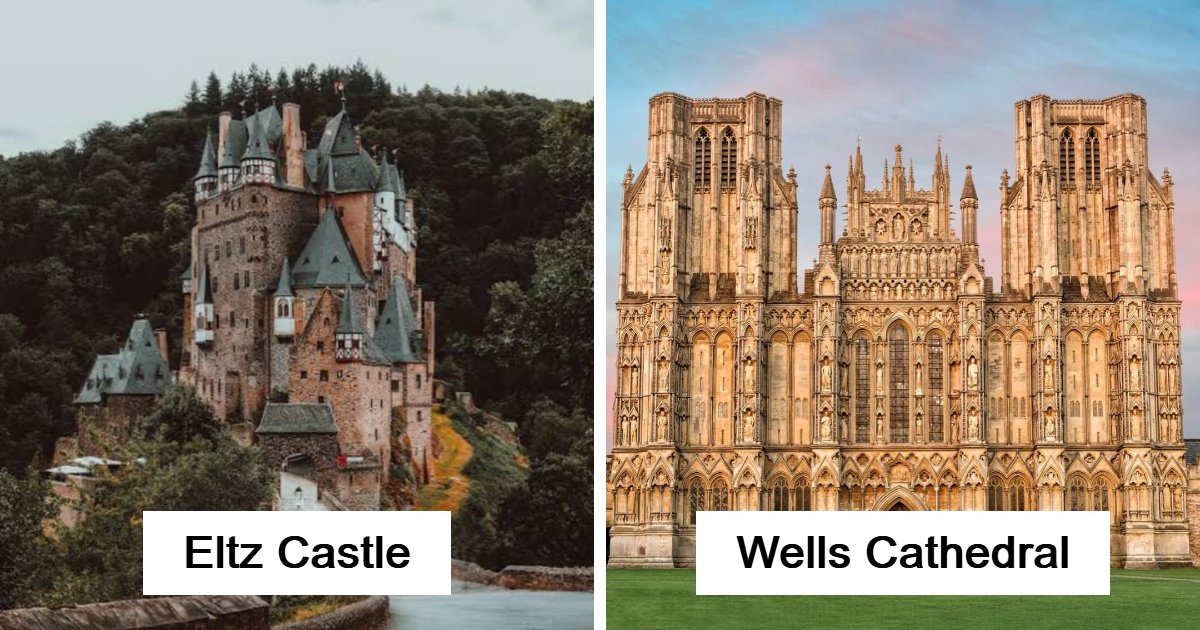
In fact, historians say that the absolute oldest structure in the world is on the Anatolian Peninsula, in modern-day Türkiye, Iraq, and Syria . It’s often called the “Cradle of Civilization” because it shows some of the earliest signs of humans building permanent structures and forming a civilization.
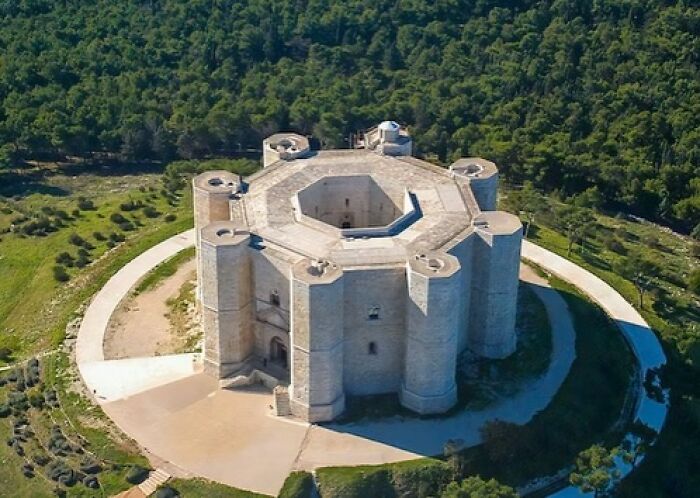 Castel del Monte 🏰 is a 13th-century citadel and castle situated on a hill in Andria in the Apulia region of southeast Italy. It was built during the 1240s by King Frederick II, who had inherited the lands from his mother Constance of Sicily.
The architect remains unknown (though it is possible that Frederick himself participated in the design). It was originally known as *Castrum Sancta Maria de Monte*, named after the monastery (Maria del Monte) that had previously occupied the same site. No traces of the original monastery survive in the current structure, nor have any historical descriptions of its form or interior been preserved. It is believed that the finishing work on the castle was never brought to completion.
Castel del Monte is often hailed as the world’s most famous castle; however, this structure is not a castle in the strict sense of the word. It lacks a moat, ramparts, and a drawbridge. Nor does it contain storage rooms for provisions, stables, or a separate kitchen. The castle’s entrance is unusual, designed in the style of a Gothic cathedral portal. The functional purpose of the castle remains enigmatic. It was previously hypothesized that it was conceived as an imperial hunting lodge; however, according to some researchers, its interior chambers were too lavishly decorated and furnished to serve merely as a «hunting lodge.»
Direct sunlight enters every room on the second floor twice a day, year-round; for the rooms on the first floor, this holds true only during the summer. Thus, the upper section of the structure functions as a gigantic sundial. On two days of the year—the summer and winter solstices—light is distributed evenly among all the rooms on the first floor, both spatially and temporally. Consequently, the first floor can serve as a calendar, while the entire building may be regarded as a unique astronomical instrument ☀️
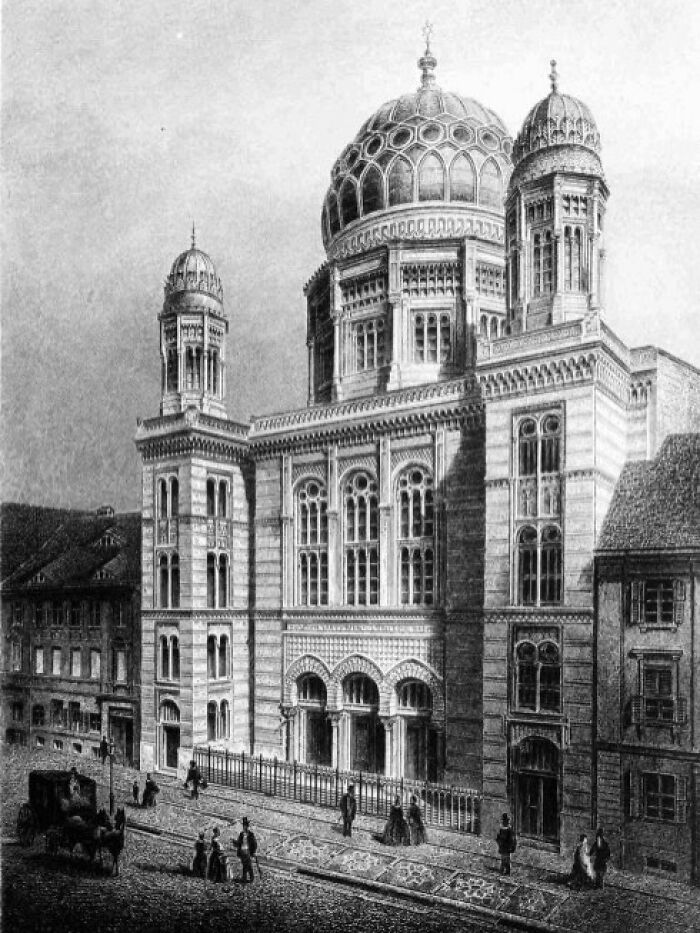 The New Synagogue 🕍 on Oranienburger Straße in Berlin is a mid-19th century synagogue built as the main place of worship for the city’s Jewish community, succeeding the Old Synagogue which the community outgrew. Because of its Moorish style and resemblance to the Alhambra, the New Synagogue is an important architectural monument in Germany.
The building was designed by Eduard Knoblauch. Following Knoblauch’s end in 1865, Friedrich August Stüler took responsibility for the majority of its construction as well as for its interior arrangement and design. It was inaugurated in the presence of Count Otto von Bismarck, then Minister President of Prussia, in 1866. One of the few synagogues to survive Kristallnacht, it was badly damaged prior to and during World War II and subsequently much was demolished; the present building on the site is a reconstruction of the ruined street frontage with its entrance, dome and towers, along with only a few rooms behind. It is truncated before the point where the main hall of the synagogue began.
The front of the building, facing Oranienburger Straße, is polychrome brickwork, richly ornamented with sculpted bricks and terracotta, accented by coloured glazed bricks. Beyond the entrance, the building’s alignment changes to mesh with pre-existing structures. The synagogue’s main dome, with its gilded ribs, is an eye-catching landmark.
The New Synagogue was built to serve the growing Jewish population in Berlin, in particular, immigrants from the East. It was the largest synagogue in Germany at the time, seating 3,000 people. The building housed public concerts, including a violin concert with Albert Einstein in 1930. With an organ and a choir, the religious services reflected the liberal developments in the Jewish community of the time.
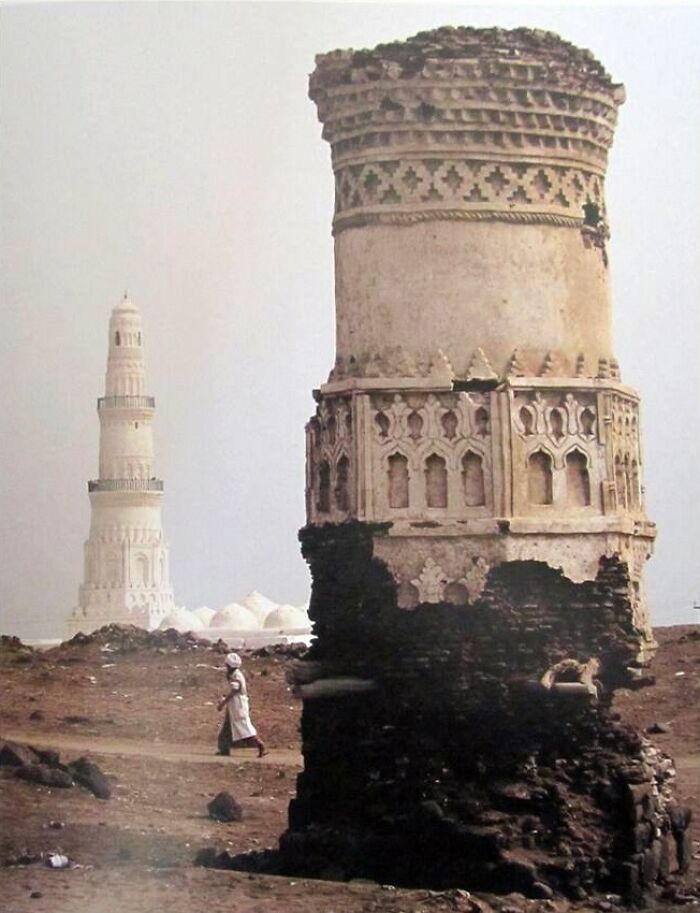 Mokha was the major marketplace for many commodities, including, but not limited to coffee (Coffea arabica) from the 16th century through the 19th century.
According to the Portuguese Jesuit missionary Jerónimo Lobo, who sailed the Red Sea in 1625, Mokha was “formerly of limited reputation and trade” but since “the Turkish assumption of power throughout Arabia, it has become the major city of the territory under Turkish d********n, even though it is not the Pasha’s place of residence, which is two days’ journey inland in the city of Sana’a.”Lobo adds that its importance as a port was also due to the Ottoman law that required all ships entering the Red Sea to put in at Mokha and pay duty on their cargoes.
Mokha reached its zenith in the first quarter of the 18th century, owing to its trade in coffee.English, Dutch, and French companies maintained factories at Mokha, which remained a major emporium and coffee exporting port until the early 19th century.
The city boasted a stone wall enclosing a citadel, as well as a labyrinth of thatched huts that surrounded the wall from without. Of these, some four hundred accommodated Jewish households that engaged in trade.In the mid-1730s, the vast majority of those occupied in trade in Mokha were the Banyan merchants, who numbered as many as 3,000 to 4,000 men.They chiefly traded in the commodity of coffee, brought by camels to the port of Mokha from places further north and inland, primarily from Bayt al-Faqih.Other trading goods brought to Mokha for export included such spices and commodities as frankincense, myrrh, Dragon’s blood, Socotrine aloe, cumin, and the Balm of Gilead.
Passing through Mokha in 1752 and 1756, Remedius Prutky found that it boasted a “lodging-house of the Prophet Muhammad, which was like a huge tenement block laid out in many hundred separate cells where accommodation was rented to all strangers without discrimination of race or religion.”
2. Pic : mosque in Al Makha is the historic Ali bin Omar al-Shadhili Mosque (also spelled al-Shadheli). Built in the 9th century AH it is a major Sufi pilgrimage site located on the Red Sea coast.

Supa Ant Canning Supplies Starter Kit (Food Grade) - Canning Kits Set for Beginners - 3 Pcs. Including Wide Mouth Jar Funnel, Magnetic Lid Lifter, Stainless Steel Jar Lifter (Assembled in USA) Blue
$9.99 (as of October 25, 2026 01:02 GMT +00:00 - More infoProduct prices and availability are accurate as of the date/time indicated and are subject to change. Any price and availability information displayed on [relevant Amazon Site(s), as applicable] at the time of purchase will apply to the purchase of this product.)
The Door Balancer Eliminates The Need for Door Props, Door Stops and Door Wedges
(as of October 25, 2026 01:02 GMT +00:00 - More infoProduct prices and availability are accurate as of the date/time indicated and are subject to change. Any price and availability information displayed on [relevant Amazon Site(s), as applicable] at the time of purchase will apply to the purchase of this product.)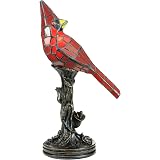
RIVER OF GOODS Stained Glass Bird Accent Lamp - 8" W x 13.5" H - Tiffany Style Table Lamps for Home, Office Desk, Bedroom, Nightstand - Blue Jay Decor
(as of October 25, 2026 01:02 GMT +00:00 - More infoProduct prices and availability are accurate as of the date/time indicated and are subject to change. Any price and availability information displayed on [relevant Amazon Site(s), as applicable] at the time of purchase will apply to the purchase of this product.)
Joking Hazard Enlarged Box Empty Box for Card Storage
$12.00 (as of October 25, 2026 01:02 GMT +00:00 - More infoProduct prices and availability are accurate as of the date/time indicated and are subject to change. Any price and availability information displayed on [relevant Amazon Site(s), as applicable] at the time of purchase will apply to the purchase of this product.)