28 Famous Landmarks Hiding Shocking Secrets You Never Knew About
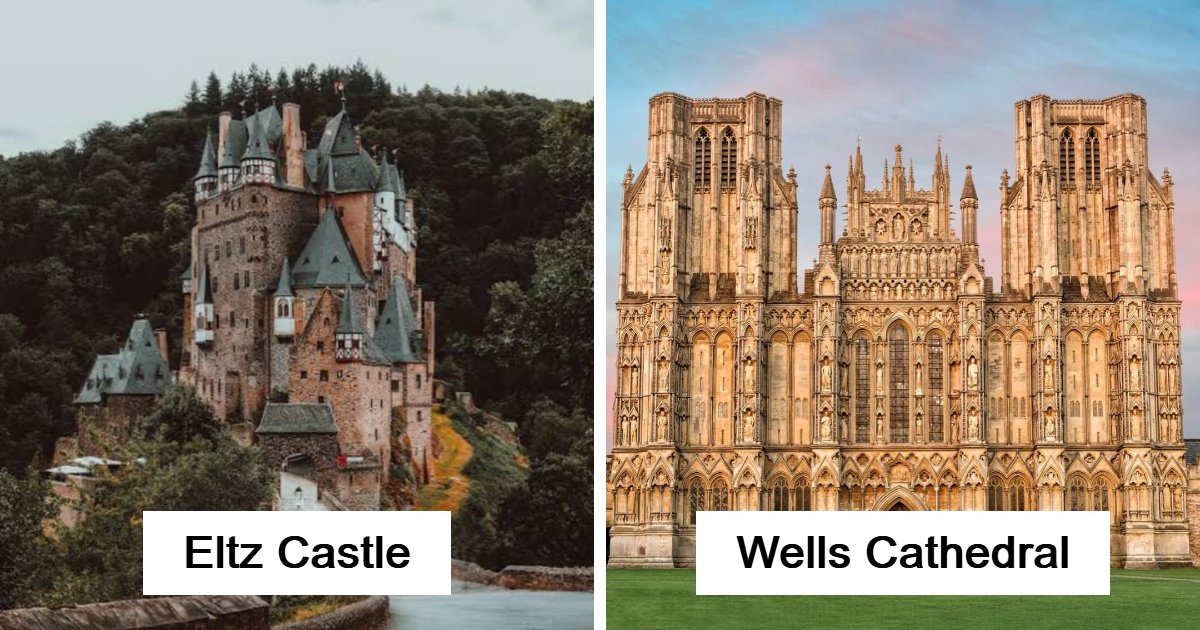
As for stone buildings, that distinction goes to the Tower of Jericho. Historians believe it is the oldest known stone tower in the world, dating to around 8000 BCE, and it even contains an internal staircase. Its exact purpose, however, remains a mystery. Some theories suggest it had an astronomical function, while others propose it was a symbol of civic authority or power.
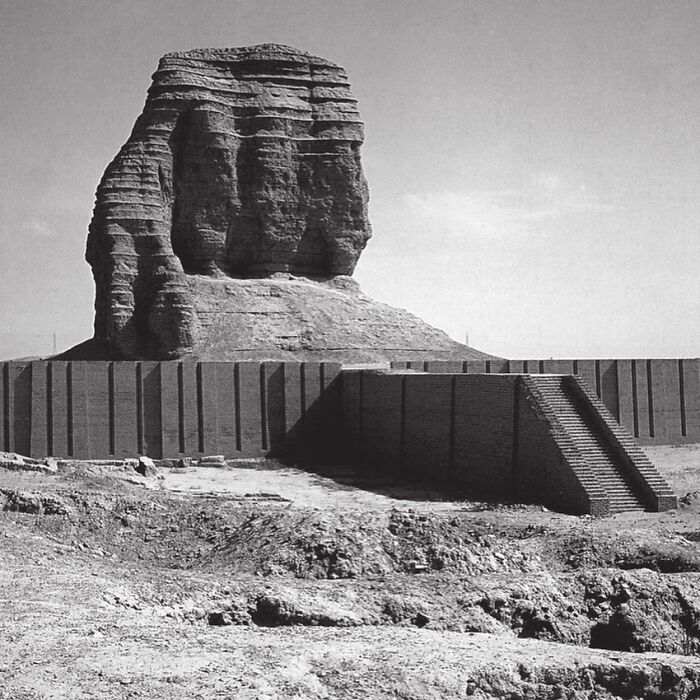 Dur-Kurigalzu (modern `Aqar-Qūf عَقَرْقُوف in Baghdad Governorate, Iraq) was a city in southern Mesopotamia, near the confluence of the Tigris and Diyala rivers, about 30 km west of the center of Baghdad. It was founded by a Kassite king of Babylon, Kurigalzu I (died c. 1375 BC) and was abandoned after the fall of the Kassite dynasty. The city was of such importance that it appeared on toponym lists in the funerary temple of the Egyptian pharaoh, Amenophis III.
The ziggurat at Aqar Quf, standing to a height of about 52 metres, has been a very visible ancient monument for centuries. For camel caravans and modern road traffic, the ziggurat has served as a signal of the near approach to Baghdad. Because of Aqar Quf’s easy accessibility and close proximity to the city of Baghdad, it has been one of Iraq’s most visited and best-known sites. The ziggurat was often confused with the Tower of Babel by Western visitors to the area from the 17th century onwards.
The Ziggurat of Dur-Kurigalzu, built in the early 14th century BC by Kurigalzu I, is located in the city’s western area and is devoted to the chief Babylonian God Enlil, who Sumerians believed to govern over wind, air, earth, and storm.
The ziggurat’s base measures 69m x 67m and it was constructed of large, well-tempered liben with many stamped baked bricks incorporated into the structure, bearing the name of Kurigalzu and his dedication of the temple E-U-GAL to Enlil.Facing the front, the Ziggurat can be approached from three main staircases leading up to the first level.Standing upright on the level withholds a terraced compound, built by layers of receding levels. At its core, there are consistent sun-dried square bricks with reed mats placed in every seven layers of brick to help hold the structure altogether. An axial flight of steps was discovered running outwards from the center of the side of the ziggurat towards the temple-complex and was built of solid kiln-baked brick set in bitumen 📜
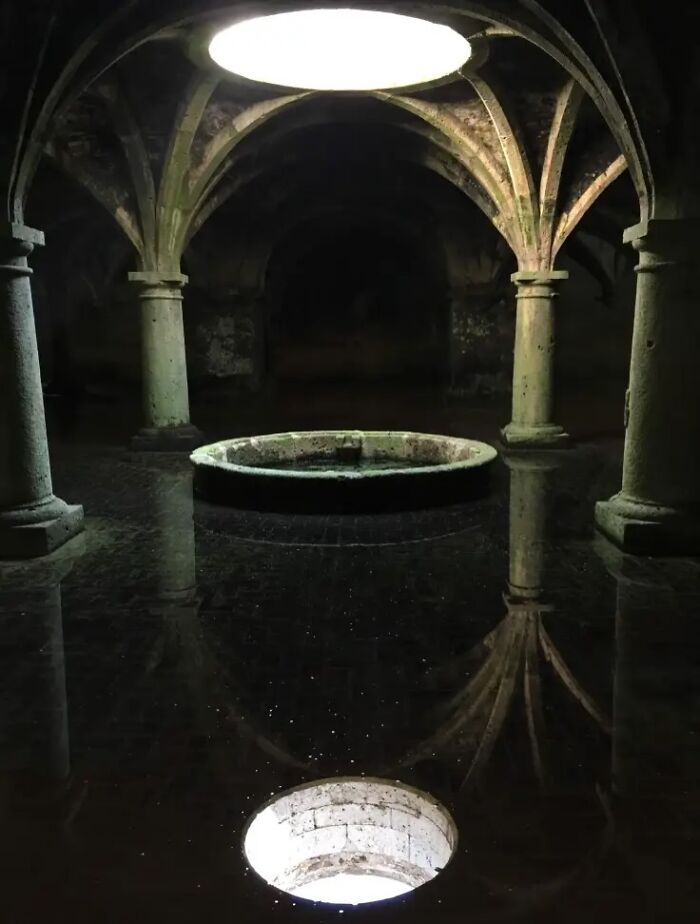 The Portuguese Cistern 💧 is a historic cistern in El Jadida, Morocco. It is located beneath the citadel at the heart of the historic Portuguese fortified city of Mazagan.
The cistern was built beneath the Citadel, the original fort and first permanent structure that the Portuguese built on this site in 1514, before it was expanded into the larger walled fortress in 1541.The chamber’s original function is not clear. It may have been an armory, barracks, or granary, but it is recorded as having been converted into a cistern in 1541.It was designed by an architect named Miguel de Arruda but the construction work was delegated to João de Castilho.
The semi-subterranean chamber has a roughly square plan measuring around 33 to 34 metres (108 to 112 ft) per side, was constructed with five rows of five stone pillars and columns.The chamber is built in a late Gothic style known as Manueline.A round opening in the center of the chamber served to collect rainwater.
The cistern is known today for the visual impression created by the thin layer of water covering the floor, which creates ever-changing reflections from the single shaft of light through the central hole in the ceiling
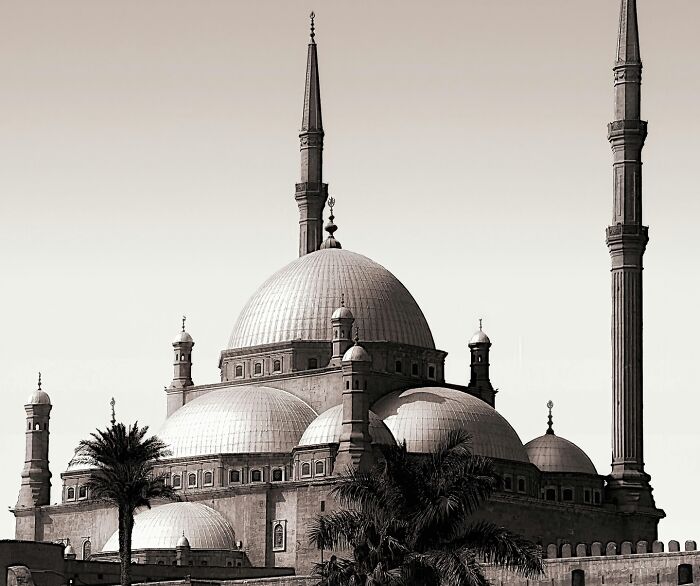 The Muhammad Ali Mosque 🕌✨ is a mosque located in the Citadel of Cairo, Egypt. It was commissioned by Muhammad Ali Pasha and built between 1832 and 1857. It is sometimes called the Alabaster Mosque due to the prominent use of alabaster as a covering for its walls.
The new mosque was founded in 1830.In order to accommodate his mosque and new palaces in the Citadel, Muhammad Ali demolished the old and partially ruined Mamluk-era palaces that stood on this site. The extensive decoration of the mosque was not completed until 1857, during the reign of Sa’id Pasha. Muhammad Ali Pasha was buried in a tomb carved from Carrara marble. His body was transferred here from Hosh al-Basha in 1857.
The most extensive care for the mosque occurred during the reign of King Fuad I, following the discovery of structural issues. Mahmoud Pasha Ahmed, Director of the Department for the Preservation of Arab Antiquities, identified severe deterioration in the mosque’s structure. King Farouk also undertook the restoration of the mosque’s clock tower, repairing the long-defunct clock and commissioning plans to clad the remaining facades with alabaster. He declared the southern and northern courtyards as sanctuaries of the mosque and beautified its surroundings.
A monumental tower clock rises over the northwestern wall of the courtyard. This was presented to Muhammad Ali by King Louis Philippe of France around in 1846 in exchange for the obelisk of Luxor now standing in Place de la Concorde in Paris.Made of iron, it is designed in a mix of neo-Gothic and orientalist styles, with a tearoom incorporated into its top level

1MORE Triple Driver In-Ear Headphones - Silver - Wired - Adult - In Ear - 18 grams - 90 days limited warranty
(as of October 25, 2026 01:02 GMT +00:00 - More infoProduct prices and availability are accurate as of the date/time indicated and are subject to change. Any price and availability information displayed on [relevant Amazon Site(s), as applicable] at the time of purchase will apply to the purchase of this product.)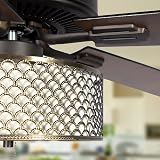
RIVER OF GOODS Mid-Century Modern Transitional LED Bronze Chrome Ceiling Fan - 52" L x 52" W - Rich Barnwood/Light Driftwood Fan Blades - Metallic Ceiling Fan with Light and Fabric Shade
(as of October 25, 2026 01:02 GMT +00:00 - More infoProduct prices and availability are accurate as of the date/time indicated and are subject to change. Any price and availability information displayed on [relevant Amazon Site(s), as applicable] at the time of purchase will apply to the purchase of this product.)
RIVER OF GOODS Coastal 52 Inch Wooden Bead LED Ceiling Fan, Cream
(as of October 25, 2026 01:02 GMT +00:00 - More infoProduct prices and availability are accurate as of the date/time indicated and are subject to change. Any price and availability information displayed on [relevant Amazon Site(s), as applicable] at the time of purchase will apply to the purchase of this product.)
PROMIXX FORM Protein Shaker Bottle - A Premium Shaker Bottle for Protein Shakes Infusions and Hydration - Durable Gym Shaker Bottle, Leakproof Lid, Odorless - 26oz (Graphite Gray)
$12.99 (as of October 25, 2026 01:02 GMT +00:00 - More infoProduct prices and availability are accurate as of the date/time indicated and are subject to change. Any price and availability information displayed on [relevant Amazon Site(s), as applicable] at the time of purchase will apply to the purchase of this product.)