28 Famous Landmarks Hiding Shocking Secrets You Never Knew About
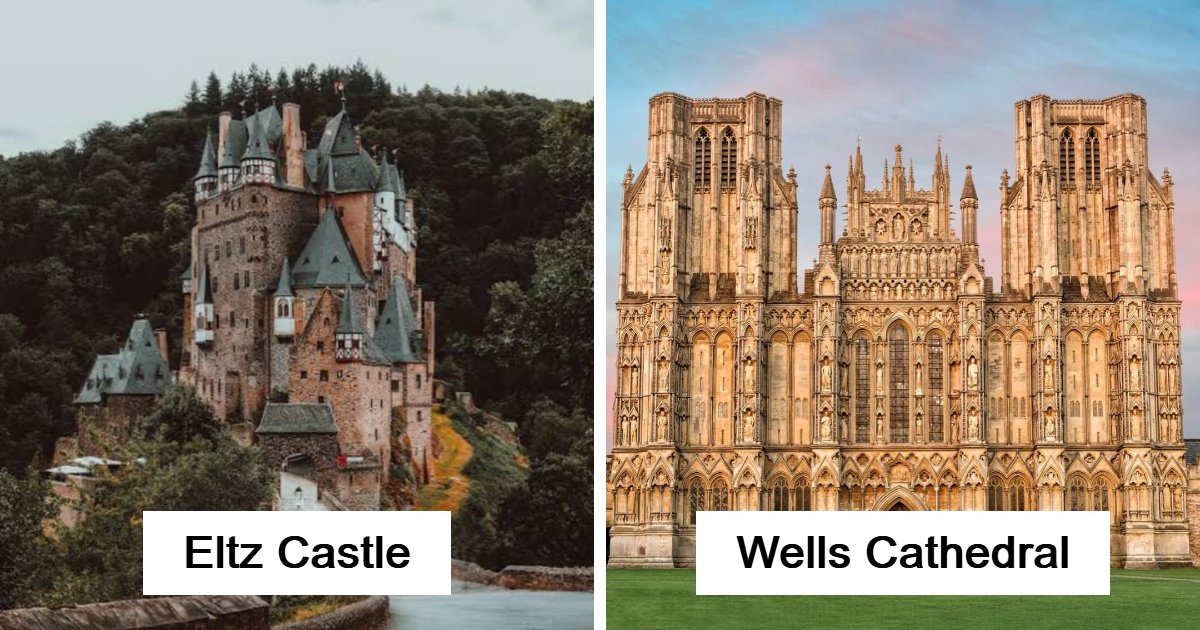
Ever wondered what it’s like to step inside a castle that’s defied centuries of wars, revolutions, and downright chaos without so much as a scratch? Well, buckle up, because Eltz Castle in Germany is exactly that—a medieval marvel perched above the Moselle River, overseeing tales as old as time itself. Owned and cherished by the same family since the 12th century, this fortress hasn’t just stood the test of time; it’s practically laughed in its face. From surviving the Palatinate War of Succession thanks to a lord doubling as a French army officer, to housing a treasure trove of art that whispers stories of ages past, Eltz Castle is a living history book, with secrets hidden behind every turret and tapestry. So, are you ready to uncover the spellbinding sagas behind 28 well-known landmarks that most folks have never even heard about? Hang tight—it’s gonna be a wild ride! LEARN MORE
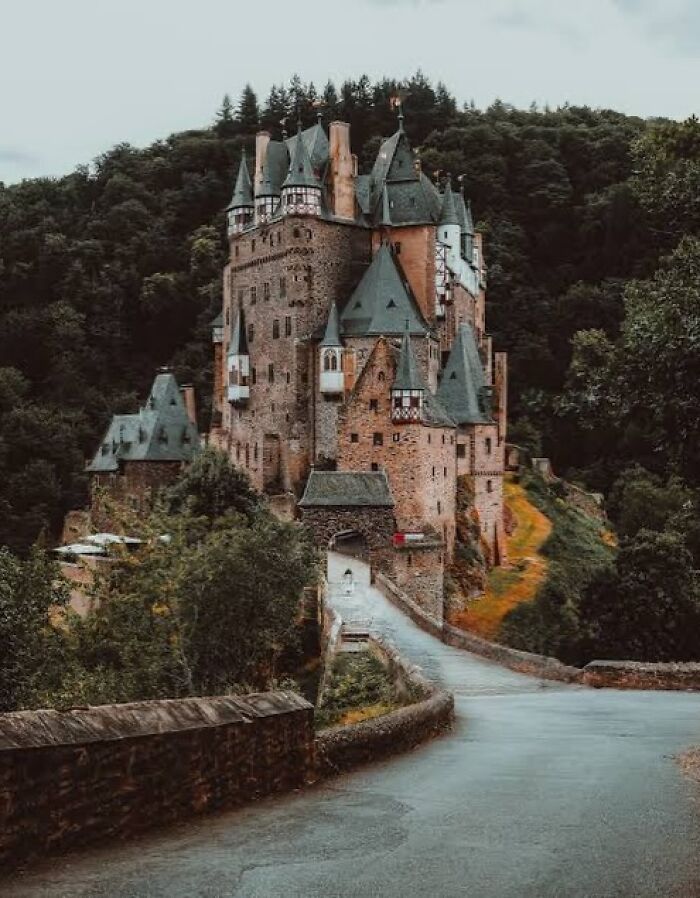 Eltz Castle 🏰 is a medieval castle nestled in the hills above the Moselle between Koblenz and Trier, Germany. It is still owned by a branch of House of Eltz who have lived there since the 12th century. Eltz Castle along with Bürresheim Castle and Lissingen Castle are the only castles in the Eifel region which have never been destroyed.
Several hundred years later, House of Eltz began work on the Platteltz, a Romanesque keep, which was built on the site of the old manor hall. This remains the oldest part of the castle. By 1157 the fortress was an important part of the Holy Roman Empire under Frederick Barbarossa. It continued to protect the trade routes from the Moselle Valley and the Eifel region.
Started in 1470 by Philipp zu Eltz, the 10-story Greater Rodendorf House takes its name from the family’s land holding in Lorraine. The oldest part is the flag hall with its late Gothic vaulted ceiling, which was probably originally a chapel. Construction was completed around 1520. The (so-called) Little Rodendorf house was finished in 1540, also in Late Gothic style.
❗️During the Palatinate War of Succession from 1688 to 1689, many of the early Rhenish castles were destroyed. However, the castle was saved from destruction because its lord as the time was Hans Anton zu Eltz-Üttingen who was also a senior officer in the Royal French Army of Louis XIV.
In the mid 19th century, Count Karl zu Eltz restored the castle.
The masterpieces of the art collection, comprising over 500 exhibits from the 12th to the 19th centuries, are displayed in the treasury in the vaulted cellars of the Rübenach House. Among the works of Augsburg goldsmithing and silversmithing are a 1.10-meter-high statue of the bridge saint John Nepomuk by Franz Christoph Mäderl (1752), Diana on the Stag (circa 1600), and numerous ornate vessels and sacred objects ⚜️
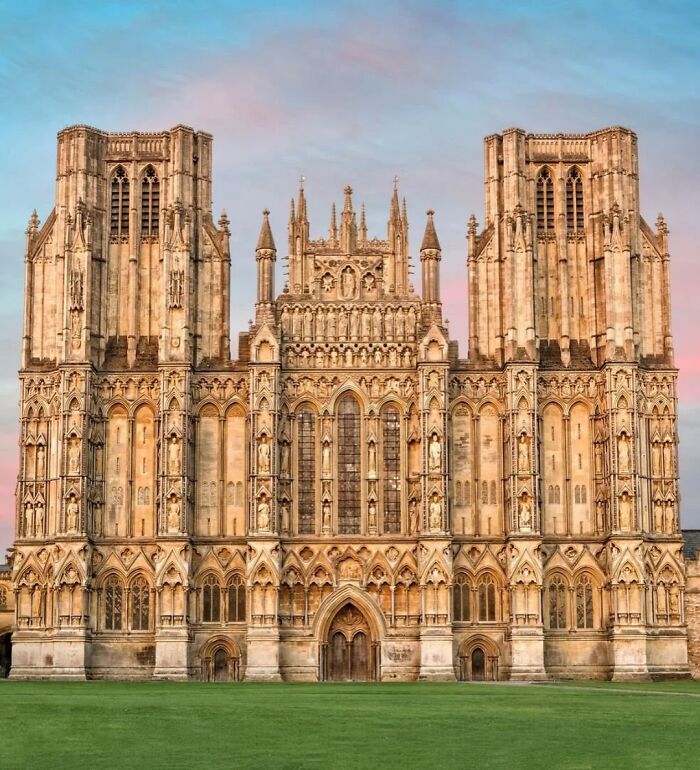 Wells Cathedral, ⛪️ formally the Cathedral Church of St Andrew, is a Church of England cathedral in Wells, Somerset, England. The earliest record of a church on the present site is a charter of 766.A bishopric was established in 909; however in 1090 the cathedral of the diocese was moved to Bath Abbey and remained there until Wells became co-cathedral in 1218. Two towers were added to the west front between 1385 and 1410 in the Perpendicular Gothic style, and the cloisters were remodelled in the same style between 1420 and 1508. The cathedral was restored over the course of the nineteenth and early twentieth centuries.
Construction of the cathedral began in about 1175, to the design of an unknown master-mason. Wells is the first cathedral in England to be built, from its foundation, in Gothic style. The vault of the nave rises steeply in a simple quadripartite form, in harmony with the nave arcade.
Wells Cathedral contains one of the most substantial collections of medieval stained glass in England,despite damage by Parliamentary troops in 1642 and 1643.
The greater part of the stone carving of Wells Cathedral comprises foliate capitals in the stiff-leaf style. They are found ornamenting the piers of the nave, choir and transepts ❗️Twenty-seven of the carvings depict animals: rabbits, dogs, a puppy biting a cat, a ewe feeding a lamb, monkeys, lions, bats, and the Early Christian motif of two doves drinking from a ewer. Eighteen have mythological subjects, including mermaids, dragons and wyverns. Five are clearly narrative, such as the Fox and the Geese, and the story of Alexander the Great being raised to Heaven by griffins.
The bells at Wells Cathedral are the heaviest ring of ten bells in the world,the tenor bell (the 10th and largest), known as Harewell, weighing 56.25 long hundredweight (2,858 kg).
The library above the eastern cloister was built between 1430 and 1508.Its collection is in three parts: early documents housed in the Muniment Room;
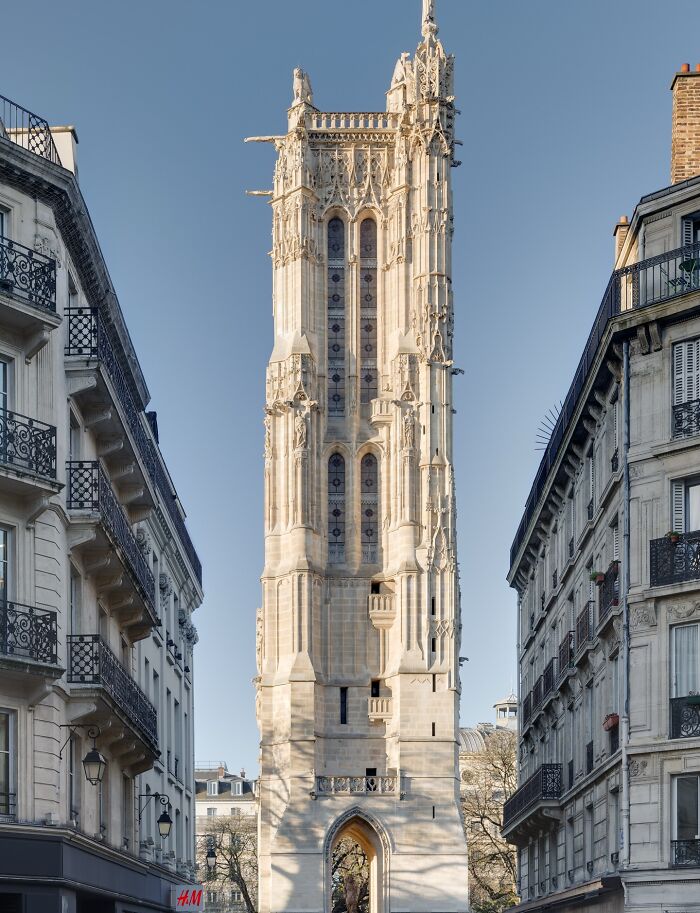 Tour Saint-Jacques is a monument located in the 4th arrondissement of Paris, France, on the Rive Droite. This 52-metre Flamboyant Gothic tower at the intersection of the Rue de Rivoli with Rue Nicolas-Flamel is all that remains of the former medieval Church of Saint-Jacques-de-la-Boucherie (‚Saint James of the Meat Market‘), which was partially rebuilt in the 16th-century and demolished in 1797, during the French Revolution, leaving only the tower. The stones of the old church were treated as if it were a quarry 📜
It was built in 1509 to 1523, during the reign of King Francis I. With a dedication to Saint James the Greater, the ancient church and its landmark tower welcomed pilgrims setting out on the road that led to Tours and headed for the Way of St James, which led to the major pilgrimage destination of Santiago de Compostela.
The church, with the exception of the tower, was demolished in 1793; preservation of the tower was a condition of the contract by which the church was bought for the value of its building materials. In 1824 it was being used as a shot tower to make small shot. It was repurchased by the City of Paris in 1836 and declared a monument historique in 1862. A statue of the saint was installed on the top of the tower during the 19th century.
❗️A statue of Blaise Pascal is located at the base of the tower, commemorating the experiments on atmospheric pressure, though it is debated whether they were performed here or at the church of Saint-Jacques-du-Haut-Pas.A meteorological laboratory is also installed at the top of the tower.The tower inspired Alexandre Dumas to write the play La tour Saint-Jacques-de-la-boucherie in 1856.❗️
🗝️ Nicolas Flamel, reputedly an alchemist and a patron of the church, was buried under its floor.
The tower was surrounded by scaffolding and obscured by sheeting for some years as surveyors investigated the condition of the stone. Recent findings show that most of the stone and its ornamentation originates from the late-medieval era of the tower’s construction, and was not added by the 19th-century restorers.
RIVER OF GOODS Coastal 52 Inch Wooden Bead LED Ceiling Fan, Brown
(as of October 25, 2026 01:02 GMT +00:00 - More infoProduct prices and availability are accurate as of the date/time indicated and are subject to change. Any price and availability information displayed on [relevant Amazon Site(s), as applicable] at the time of purchase will apply to the purchase of this product.)
RIVER OF GOODS LED Boho Ceiling Fan with Hand Woven Brown/Natural Rope - Macrame Knot Work and Hemp Rope Style Eclectic Cottage Decor - 52" L x 52" W - Rich Barnwood/Light Driftwood Fan Blades
(as of October 25, 2026 01:02 GMT +00:00 - More infoProduct prices and availability are accurate as of the date/time indicated and are subject to change. Any price and availability information displayed on [relevant Amazon Site(s), as applicable] at the time of purchase will apply to the purchase of this product.)
Joking Hazard by Cyanide & Happiness - 360+ Funny & Inappropriate Comic Cards, Hilarious Party Games | Includes Add-Your-Own-Words Cards
$24.95 (as of October 25, 2026 01:02 GMT +00:00 - More infoProduct prices and availability are accurate as of the date/time indicated and are subject to change. Any price and availability information displayed on [relevant Amazon Site(s), as applicable] at the time of purchase will apply to the purchase of this product.)
KiddyCare Diaper Caddy Organizer Cart for Nursery Baby Basket Gift for Boy/Girl | Diaper Caddy for Changing Table Basket Organizer with Dividers | Caddy for Baby Stuff Breast Pump Caddy - Regular
$9.99 (as of October 25, 2026 01:02 GMT +00:00 - More infoProduct prices and availability are accurate as of the date/time indicated and are subject to change. Any price and availability information displayed on [relevant Amazon Site(s), as applicable] at the time of purchase will apply to the purchase of this product.)
Kinsa Smart,Fever, Digital Medical Baby, Kid and Adult Termometro - Accurate, Fast, FDA Cleared Thermometer for Oral, Armpit or Rectal Temperature Reading - QuickCare
$18.94 (as of October 25, 2026 01:02 GMT +00:00 - More infoProduct prices and availability are accurate as of the date/time indicated and are subject to change. Any price and availability information displayed on [relevant Amazon Site(s), as applicable] at the time of purchase will apply to the purchase of this product.)Related Posts