Secrets of a 2,500-Year-Old Bronze Chariot Unearthed in Southwestern Spain Could Rewrite History
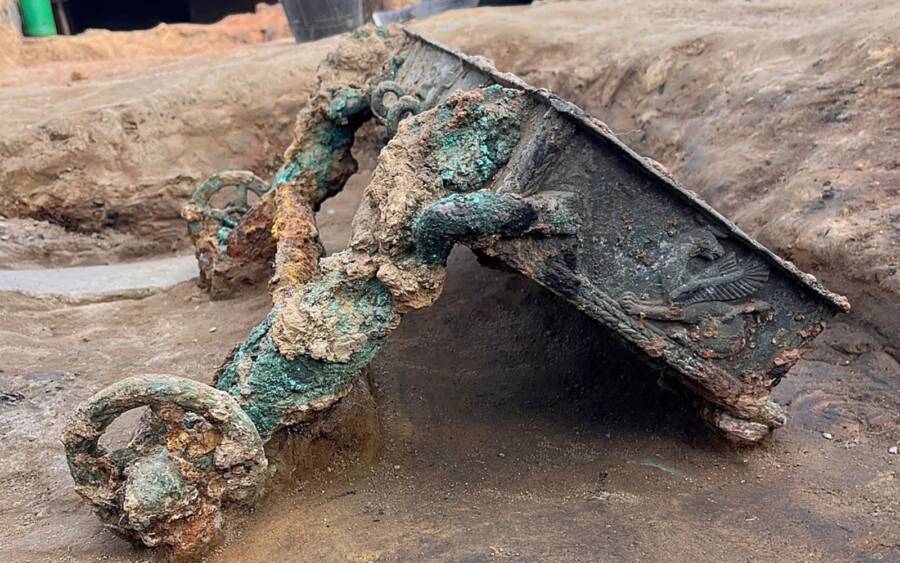
Ever stumble upon an artifact so spellbinding it makes you wonder if ancient civilizations were throwing their own epic parties—or maybe just showing off their serious bling? Well, archaeologists digging at Casas del Turuñuelo in Spain hit the mother lode: a 2,500-year-old bronze chariot decked out with griffins, Atlas-like giants, and Achelous, the river god who probably got more airtime in Greek and Etruscan mythology than some modern superheroes. This isn’t just some rusty old relic; it’s a well-preserved masterpiece whispering secrets about Tartessos, an ancient culture that thrived on the southwestern edge of the Iberian Peninsula. Why does this matter? Because this chariot could totally reshape how we see Mediterranean trade and cultural exchanges from back in the day. Imagine myth meets metallurgy, stand-up banquets, and ritual feasts all rolled into one shiny, divine ride. Curious to dive deeper into this slice of ancient wow? LEARN MORE
While excavating at Casas del Turuñuelo, researchers happened upon this ancient masterwork adorned with images of griffins, Atlas-like figures, and Achelous, a river god prominent in the Greek and Etruscan traditions.

Ayuntamiento de GuareñaArchaeologists date the chariot to approximately the fifth century B.C.E.
In a first-of-its-kind discovery, archaeologists found a well-preserved ceremonial chariot dating back to the 5th century B.C.E. at the Casas del Turuñuelo ruins in Guareña, Spain.
This bronze chariot, which may have been used in ritual feasts, will hopefully reveal new details about the ancient civilization of Tartessos that inhabited the southwestern portion of the Iberian peninsula more than two millennia ago.
The Rare Ceremonial Chariot Discovered Among Tartessian Ruins In Spain
Researchers from the Institute of Archaeology of Mérida found the chariot during their eighth consecutive excavation of the site, which is centered upon an ancient two-floor building that has provided a wealth of archaeological discoveries. At the end of the fifth century B.C.E., occupants of Casas del Turuñuelo likely burned or buried the building, leaving a mound that preserved the building’s contents astonishingly well to this day.
While researchers have found many valuable artifacts at this site, Esther Rodríguez, co-director of the project, said that the chariot “is one of the most significant finds made to date at this Tartessian site.” The researchers added that no comparable discovery has ever been made in Iberia before.
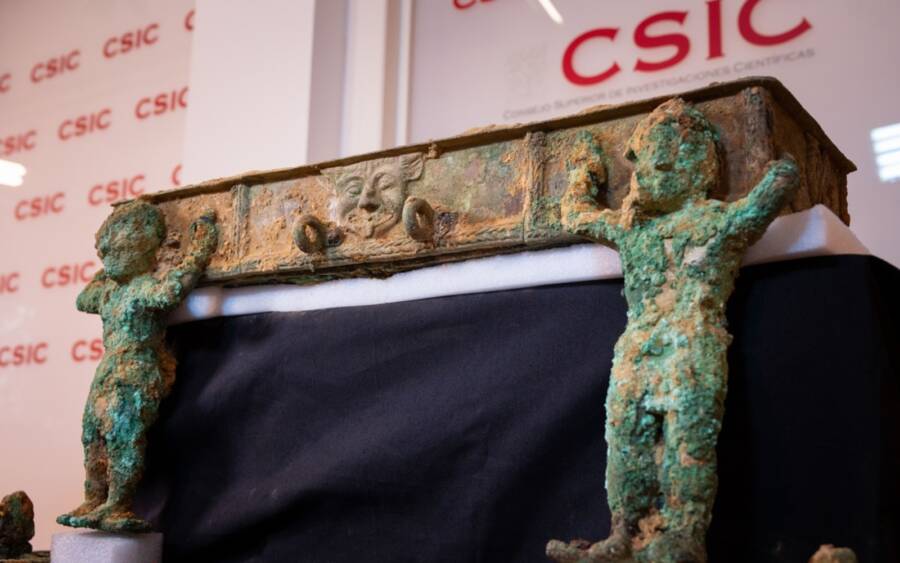
Ayuntamiento de GuareñaThe chariot features an image of Achelous, a river deity in the Greek and Etruscan traditions.
The team carried out excavations in corridor S3 of the building, an area that had already been shown to contain unique ritualistic structures. One of these was an altar in the shape of a bull, an animal with great symbolic significance in ancient Iberia.
In this same area, archaeologists discovered the extant half of the ceremonial chariot, with two wheels and much of the main body of the vehicle still intact. Even though the team did not find a complete artifact, they were rewarded with well-preserved decorative and mechanical elements to study and document.
The chariot was constructed with both bronze and iron, from which the axle was made. Researchers noted that the craftsmanship was excellent, as was the artifact’s state of preservation.
The chariot, which the team believes was created in honor of a deity, featured several religious and cultural motifs. Experts identified the central figure as Achelous, a river deity that was popular in Greek and Etruscan cultures and often portrayed with bull-like horns.
Two griffins, mythological creatures with the head of an eagle and the body of a lion, are positioned at opposite ends of the vehicle. The chariot is also supported by two Atlas-like male figures, adding another layer of either Greek or Etruscan ceremonial influence.
Because the chariot was found near the previously-uncovered altar and in a room that had been identified as a possible banquet hall, the team believes that the chariot may have been used during ritual feasts. In fact, it may have been used during the final ceremony before the burial of the building at the end of the 5th century B.C.E.
How This Discovery Sheds Light On Tartessos’ Relationship To The Wider Mediterranean World
This discovery deepens experts’ knowledge of Tartessos and where it stood in the world of commerce and cultural exchange in the ancient Mediterranean.
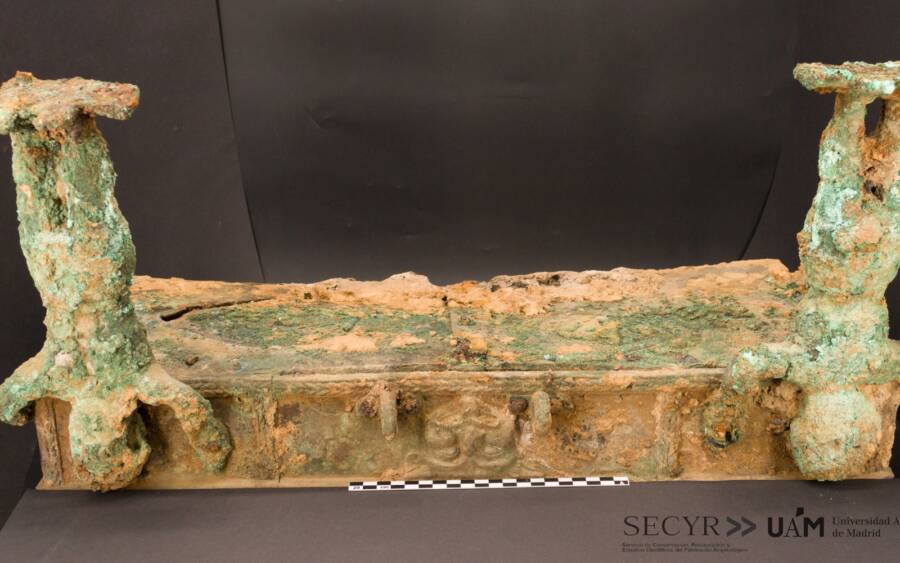
Ayuntamiento de GuareñaArchaeologists say the chariot sheds light on the trade connections between Tartessos and other ancient Mediterranean societies.
Over the course of the first millennium B.C.E., the civilization of Tartessos developed in Iberia. It was shaped as a culture by both local communities and Phoenician colonists, who came to southern Iberia in the 9th century B.C.E. while on the hunt for precious metals.
Although the Tartessian civilization largely inhabited an inland area in the modern-day Spanish region of Extremadura, bordering Portugal, the new chariot discovery suggests that Tartessos remained connected with other ancient civilizations in the region.

KiddyCare Diaper Caddy Organizer Cart for Nursery Baby Basket Gift for Boy/Girl | Diaper Caddy for Changing Table Basket Organizer with Dividers | Caddy for Baby Stuff Breast Pump Caddy - Regular
$9.99 (as of October 18, 2026 01:00 GMT +00:00 - More infoProduct prices and availability are accurate as of the date/time indicated and are subject to change. Any price and availability information displayed on [relevant Amazon Site(s), as applicable] at the time of purchase will apply to the purchase of this product.)
PROMIXX FORM Protein Shaker Bottle - A Premium Shaker Bottle for Protein Shakes Infusions and Hydration - Durable Gym Shaker Bottle, Leakproof Lid, Odorless - 26oz (Graphite Gray)
$10.81 (as of October 18, 2026 01:00 GMT +00:00 - More infoProduct prices and availability are accurate as of the date/time indicated and are subject to change. Any price and availability information displayed on [relevant Amazon Site(s), as applicable] at the time of purchase will apply to the purchase of this product.)
Rhythm Superfoods Kale Chips, Zesty Nacho, Organic and Non-GMO, 2.0 Oz (Pack of 4), Vegan/Gluten-Free Superfood Snacks
(as of October 18, 2026 01:00 GMT +00:00 - More infoProduct prices and availability are accurate as of the date/time indicated and are subject to change. Any price and availability information displayed on [relevant Amazon Site(s), as applicable] at the time of purchase will apply to the purchase of this product.)
RIVER OF GOODS Mid-Century Modern Transitional LED Bronze Chrome Ceiling Fan - 52" L x 52" W - Rich Barnwood/Light Driftwood Fan Blades - Metallic Ceiling Fan with Light and Fabric Shade
(as of October 18, 2026 01:00 GMT +00:00 - More infoProduct prices and availability are accurate as of the date/time indicated and are subject to change. Any price and availability information displayed on [relevant Amazon Site(s), as applicable] at the time of purchase will apply to the purchase of this product.)