The Surprising Sleep Secret Hidden in Our Ancestors’ Nighttime Habits—And Why It Could Change Your Life Tonight
Ever wondered if your eight-hour sleep marathon is actually a modern luxury—or maybe even a medieval oddity? Turns out, back in the day, people didn’t just crash and snooze through the night like we do now. Nope, they had what’s called “biphasic sleep,” splitting their night into two distinct snooze sessions with a wakeful interlude in the middle. Imagine waking up at midnight not to panic because you can’t get back to sleep, but to hang out, read, or heck, even pop by your neighbor’s for a chat. It’s like the original late-night social hour, right in the middle of the darkness. Historians have uncovered piles of old letters and diaries hinting that this wasn’t just a quirk but a pretty common practice—before the Industrial Revolution flipped our clocks and our sleep patterns upside down. So, is our solid-block sleep the best thing since sliced bread, or have we been missing out on a centuries-old way to relax and recharge? Let’s dive into the curious history of “first sleep” and “second sleep” and see what the docs and diaries have to say about this midnight phenomenon.
Historians have found references to “first sleep” and “second sleep” in historical documents as well as evidence that activities like chores and socialization took place in the middle of the night between these two blocks.
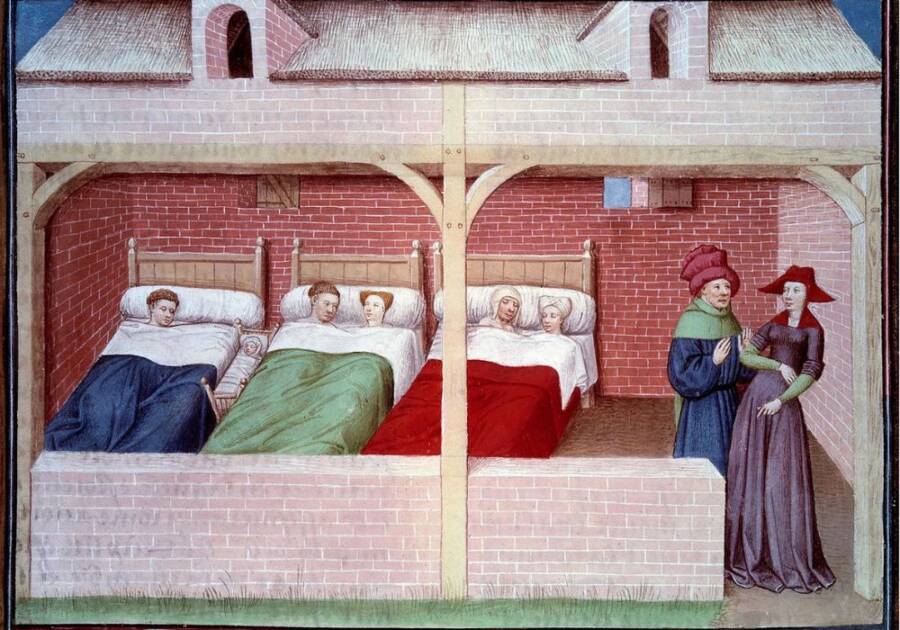
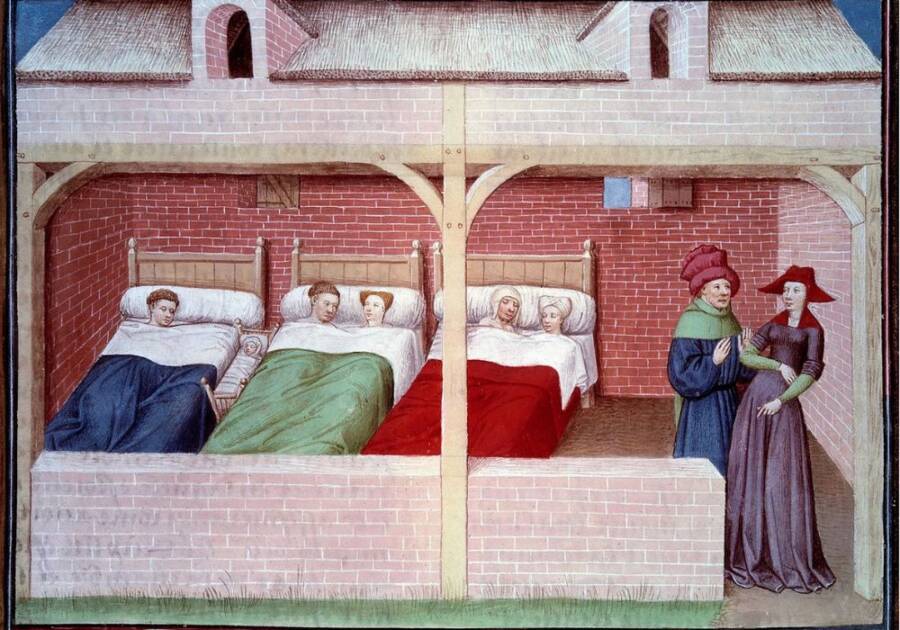
Public DomainIn medieval times, families often shared beds — and seemingly woke up in the middle of the night to socialize and do chores.
In the modern world, the average person sleeps for roughly seven to nine hours each night before waking up, going about their day, and heading back to bed. But that may not have always been the case. Some experts believe that “biphasic sleep” — sleep that is broken up into two separate phases — was common throughout history.
In a video with over 2.6 million views, TikTok user Lexi Natoli (@yolkfather) states, “If you slept for eight hours straight in the medieval times, people would probably think there’s something wrong with you.”
Inside The Theory Of Biphasic Sleep
According to Natoli, “Sleeping straight through the night was not a normal thing to do.” Instead, she says that sleep in the medieval period was biphasic, “which basically just means instead of one long stretch, the night was split into two different sleeps.”
“People would go to bed early — I’m talking right after sunset — and then sleep for about four hours,” she says. “And then, around midnight, everyone would just wake up. People would read or pray or talk to their families. It was such a normal thing that some people would even go visit their neighbors next door.”
“Many people saw this time as their quiet, sacred period in the middle of the night,” Natoli states. “It was much needed after being busy all day and not having any time to relax.”
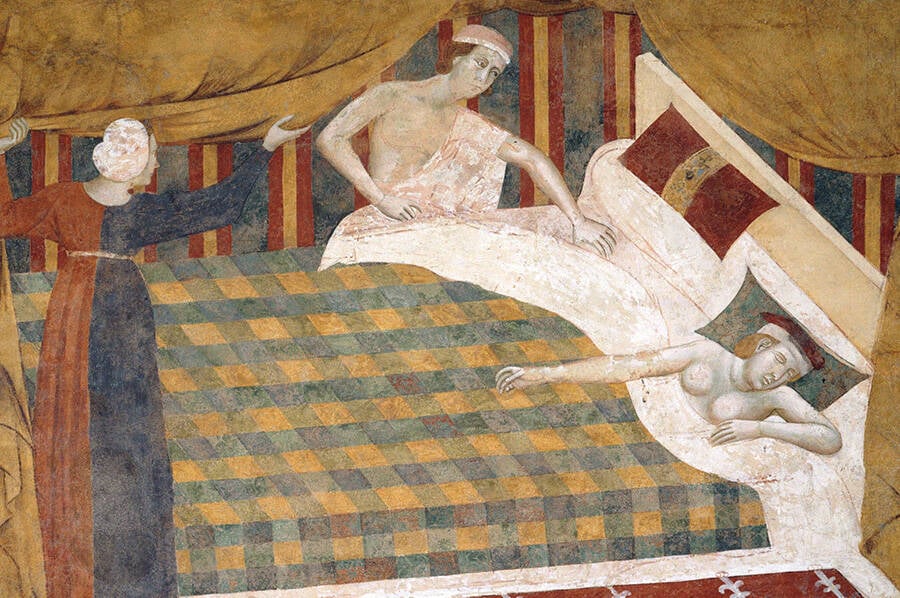
Public DomainAccording to some scholars, biphasic sleep was common and socially accepted during the medieval period.
In the caption, she adds, “Can we bring back biphasic sleep? That actually sounds nice.”
This idea is based on a theory by historian Roger Ekirch. Beginning in the early 1990s, Ekirch scoured historical documents like letters, diaries, books, legal testimonies, medical textbooks, and newspapers and found countless references to a “first sleep” and a “second sleep.” Additionally, he found evidence that various activities took place between these two phases, indicating that sleep was occurring in two separate blocks.
In the years since his initial theory was published, other scholars have found evidence that indicates biphasic sleep was common and socially accepted. Some claim that one single stretch of sleep only became normal during the Industrial Revolution, when mechanization meant that people converted their schedules to clock time.
So, without industrialization, would humans be natural biphasic sleepers? A study from 1992 sought to answer this question by limiting participants to just 10 hours of light per day. The experiment found that participants naturally shifted into a biphasic sleep pattern.
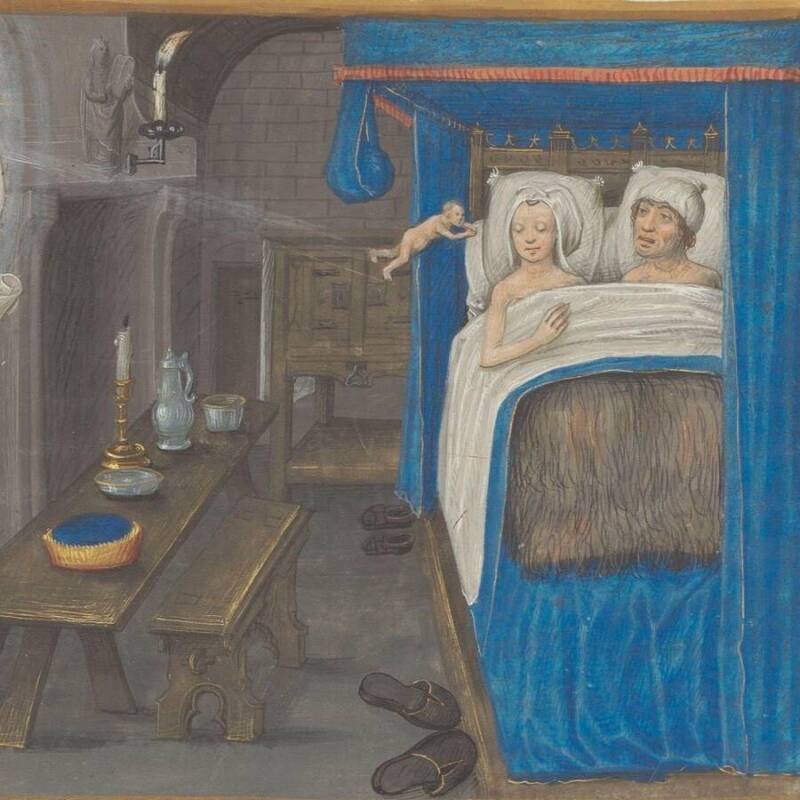
Public DomainCouples likely used the period between sleep cycles to conceive children, as depicted in this 15th-century painting of newlyweds on their wedding night.
However, the theory that this is “natural” is a bit controversial. The 1992 study had just 16 participants, so it wasn’t the best indicator of general human behavior. Furthermore, the experiment was criticized for having unnatural conditions. In 2023, Dr. Niall Boyce wrote in the journal Medical History, “The extent to which this experimental regime can be considered a simulation of sleeping conditions in the pre-industrial — and specifically the early modern — world is dubious.”
In fact, later studies that were repeated in more natural environments found that, while circadian rhythms were affected, biphasic sleep was not reported.
So, was biphasic sleep actually a widespread phenomenon throughout history?
Is This The Way We’re Supposed To Sleep?
In his paper, Boyce noted that reports of biphasic sleep may have been the result of restlessness, not ideal slumber. Other literary references to “first” and “second” sleep, he stated, may have non-biphasic explanations.
RIVER OF GOODS Alabaster LED Mesh Caged Ceiling Fan - 52" L X 52" W - White/Oak Wood-Grain Blades
(as of October 18, 2026 01:00 GMT +00:00 - More infoProduct prices and availability are accurate as of the date/time indicated and are subject to change. Any price and availability information displayed on [relevant Amazon Site(s), as applicable] at the time of purchase will apply to the purchase of this product.)
KiddyCare Diaper Caddy Organizer Cart for Nursery Baby Basket Gift for Boy/Girl | Diaper Caddy for Changing Table Basket Organizer with Dividers | Caddy for Baby Stuff Breast Pump Caddy - Regular
$9.99 (as of October 18, 2026 01:00 GMT +00:00 - More infoProduct prices and availability are accurate as of the date/time indicated and are subject to change. Any price and availability information displayed on [relevant Amazon Site(s), as applicable] at the time of purchase will apply to the purchase of this product.)
Joking Hazard by Cyanide & Happiness - 360+ Funny & Inappropriate Comic Cards, Hilarious Party Games | Includes Add-Your-Own-Words Cards
$18.79 (as of October 18, 2026 01:00 GMT +00:00 - More infoProduct prices and availability are accurate as of the date/time indicated and are subject to change. Any price and availability information displayed on [relevant Amazon Site(s), as applicable] at the time of purchase will apply to the purchase of this product.)
The Door Balancer Eliminates The Need for Door Props, Door Stops and Door Wedges
(as of October 18, 2026 01:00 GMT +00:00 - More infoProduct prices and availability are accurate as of the date/time indicated and are subject to change. Any price and availability information displayed on [relevant Amazon Site(s), as applicable] at the time of purchase will apply to the purchase of this product.)