Albania’s Pyramid: From Communist Relic to Unexpected Cultural Phenomenon
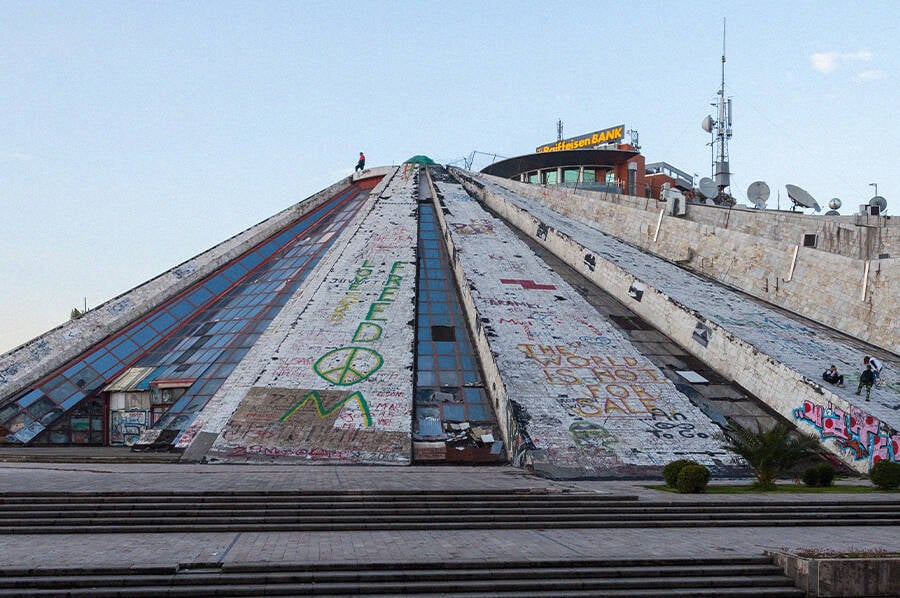
Ever stumble upon a giant pyramid smack dab in the middle of a European capital and wonder if you accidentally took a wrong turn into some ancient alien landing strip? Welcome to Tirana, Albania, where this quirky, graffiti-covered pyramid was originally cooked up as a marble shrine to the country’s most infamous dictator, Enver Hoxha. But here’s the kicker — after the communist curtain fell, instead of letting this colossal monument to paranoia and concrete bunkers fade into oblivion, the city’s scrappy youth took it over, turning it from a rusty relic into a rebellious playground and eventually, a buzzing cultural hotspot. How’s that for a plot twist? From a symbol of control to a beacon of youth creativity — the Pyramid of Tirana’s story is a wild ride through history, defiance, and reinvention that you just have to see to believe.
The Pyramid of Tirana was built to memorialize Albania’s former dictator, Enver Hoxha, but it was reclaimed by the country’s youth after the collapse of communism.
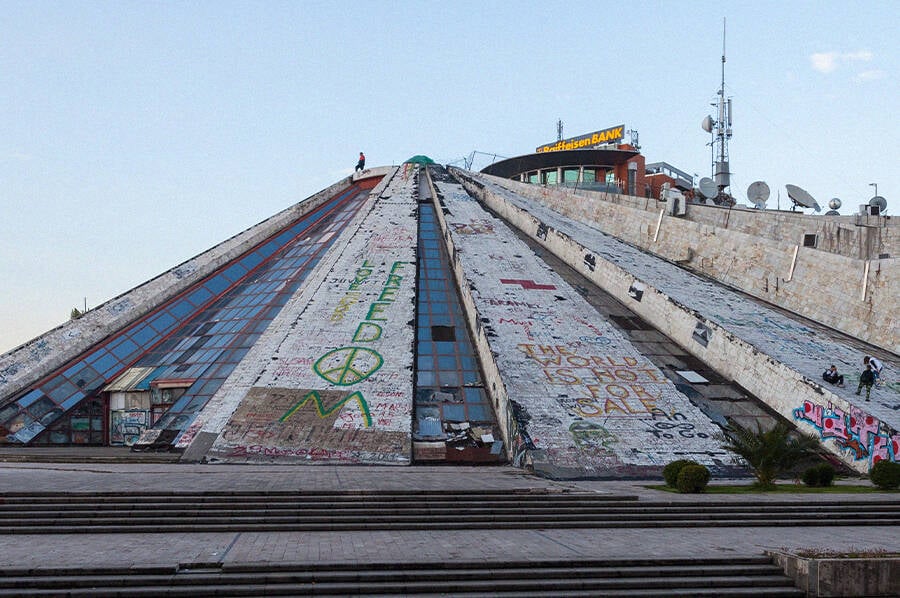
Diego Delso/Wikimedia CommonsBuilt as a monument to dictator Enver Hoxha, the Pyramid of Tirana fell into disrepair after the collapse of communism in Albania.
Travel to the capital of Albania and you’ll see a surprising structure: an illuminated pyramid near the center of the city.
Today, the pyramid is a cultural destination — but it didn’t start that way. The origins of the structure can be traced back to Albania’s former dictator, Enver Hoxha.
Under Hoxha, Albania was one of the most isolated countries on Earth. While he cooperated with other communist states at the beginning of his rule, he gradually dissolved these relationships, convinced that each one had become “revisionist.” At the same time, Hoxha became increasingly paranoid — imprisoning, exiling, or executing suspected enemies while forbidding citizens to leave the country and filling the countryside with concrete bunkers to prepare for an invasion that would never come.
When Hoxha died in 1985, the country was still largely in the grips of his cult of personality. As a result, it was announced that a museum would be built to memorialize him and honor his reign. This monument would take the form of a polished marble pyramid, placed directly in the center of Tirana.
Enver Hoxha’s Museum After The Fall Of Communism
In 1988, three years after Hoxha’s passing, the Enver Hoxha Museum opened in Tirana. Designed by a team including Hoxha’s own daughter, architect Pranvera Hoxha, and her husband, Klement Kolaneci, the museum served as a shrine to the former leader.
The museum boasted numerous photographs and personal possessions from Hoxha’s life and even housed a 22-ton statue of the man, which greeted all who entered. The peculiar pyramid shape would become a distinctive addition to the Tirana skyline, with its outline complemented and potentially inspired by the nearby Mount Dajti. It was reportedly the most expensive individual building constructed in communist Albania.
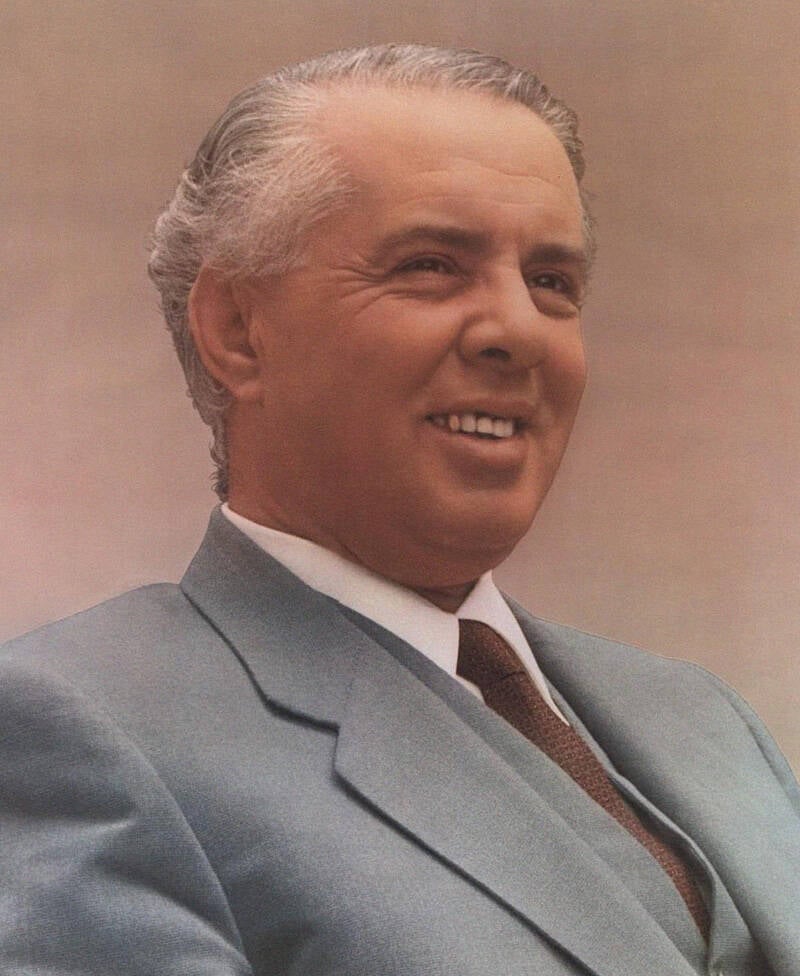
Public DomainEnver Hoxha, Albania’s former dictator.
The Enver Hoxha Museum, however, would be short-lived. Soon after Hoxha’s death, tensions rose within the country — and by April 1991, the People’s Socialist Republic of Albania was no more.
As the remnants of communist rule were dismantled, it became clear that the new Albania had no place for a museum dedicated to its former dictator. The contents of the museum were removed, and the building itself was hastily renamed the International Center of Culture while deciding on a new purpose for the structure.
As it turns out, finding a use for an enormous pyramid is more difficult than one might think. Initially, the building simply served as a site for conferences and trade fairs. From there, its uses became fairly scattered: It briefly housed a nightclub called Mumja (or “The Mummy”) before becoming a home base for NATO and humanitarian operations during the 1999 Kosovo War. It was also the temporary headquarters of broadcasters Top Channel and Top Albania Radio.
But as the building fell into disrepair, a new purpose emerged.
How Albania’s Youth Took Over The Pyramid Of Tirana
As the building fell apart and became less desirable to tenants, it found a new audience: teenagers.
While the public was largely denied access to the interior of the building, it became a central meeting point for the city’s youth. Kids climbed up the pyramid and slid down its smooth embankments, while teenagers snuck away with their partners to the top, turning the summit into a place where they could smoke cigarettes and enjoy each other’s company away from the prying eyes of the public. Graffiti artists, too, took to the monument — and by the early 2010s, the pyramid was covered in artwork and political slogans.
At this time, the interior of the pyramid was, for all intents and purposes, unusable. Every tenant left a scar on the building, and by 2010, the pyramid’s marble cladding had deteriorated or disappeared, its glass roof was leaking, and the building was too dark and cluttered to serve any actual purpose.
RIVER OF GOODS Coastal 52 Inch Wooden Bead LED Ceiling Fan, Brown
(as of October 24, 2026 01:02 GMT +00:00 - More infoProduct prices and availability are accurate as of the date/time indicated and are subject to change. Any price and availability information displayed on [relevant Amazon Site(s), as applicable] at the time of purchase will apply to the purchase of this product.)
RIVER OF GOODS LED Boho Ceiling Fan with Hand Woven Brown/Natural Rope - Macrame Knot Work and Hemp Rope Style Eclectic Cottage Decor - 52" L x 52" W - Rich Barnwood/Light Driftwood Fan Blades
(as of October 24, 2026 01:02 GMT +00:00 - More infoProduct prices and availability are accurate as of the date/time indicated and are subject to change. Any price and availability information displayed on [relevant Amazon Site(s), as applicable] at the time of purchase will apply to the purchase of this product.)
PROMIXX FORM Protein Shaker Bottle - A Premium Shaker Bottle for Protein Shakes Infusions and Hydration - Durable Gym Shaker Bottle, Leakproof Lid, Odorless - 26oz (Graphite Gray)
$12.99 (as of October 24, 2026 01:02 GMT +00:00 - More infoProduct prices and availability are accurate as of the date/time indicated and are subject to change. Any price and availability information displayed on [relevant Amazon Site(s), as applicable] at the time of purchase will apply to the purchase of this product.)
Skater Trainer Wheels - Beginners get Skateboard Tricks Fast, Safe and Fun | Viral accessory gift - Helps beginners stay excited about their new skateboard - Kids & parents love these
$28.99 (as of October 24, 2026 01:02 GMT +00:00 - More infoProduct prices and availability are accurate as of the date/time indicated and are subject to change. Any price and availability information displayed on [relevant Amazon Site(s), as applicable] at the time of purchase will apply to the purchase of this product.)