Rare Roman Surgical Tool Discovered in Bulgaria Sparks Mystery Over Ancient Medical Practices
Ever wonder how ancient doctors tackled the agony of bladder stones long before the days of modern surgery? Well, archaeologists digging around the Roman-era ruins of Heraclea Sintica in Bulgaria just hit the jackpot—a rare, 1,800-year-old bronze lithulkos, a hooked surgical tool used to physically snatch those painful little boulders right out. Imagine the nerve, literally, to perform such a delicate procedure back in the third century C.E.! This isn’t just any relic; it’s one of only two like it ever found worldwide, reminding us that even ancient physicians had their own version of high-stakes medical drama. Finding this tool in a room next to the Temple of Hercules makes you wonder—were pilgrims hoping for divine intervention also lining up for some ancient medical “quick fixes”? The layers of history here aren’t just under the dirt, they’re practically screaming to be explored. Curious how this discovery rewrites the story of ancient medicine and the bustling life of Heraclea Sintica?
Researchers exploring the Roman-era ruins of Heraclea Sintica have unearthed an 1,800-year-old bronze lithulkos, an ancient surgical tool used to remove bladder stones with a hook.
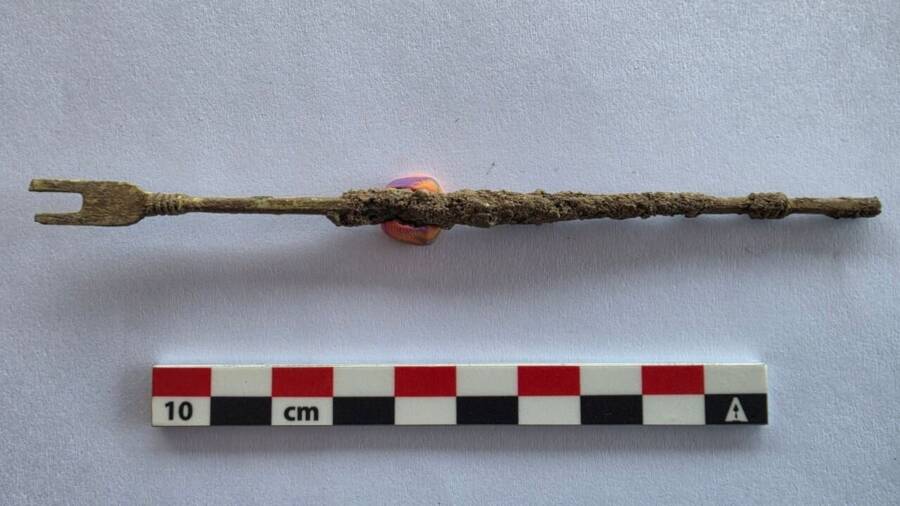
Archaeologia BulgaricaArchaeologists made a rare discovery of a specialized tool that physicians used to remove bladder stones during the Roman era.
Archaeologists excavating the ancient ruins of Heraclea Sintica in southwestern Bulgarian just uncovered a rare surgical instrument that was used to remove bladder stones in the third century C.E.
This find is exceptionally significant, the archaeologists said, because there has only been one other comparable discovery of a similar surgical instrument that’s ever been made before.
The Discovery Of A Roman-Era Surgical Tool That Removed Bladder Stones
The finding, announced on July 3, was published by excavation director Lyudmil Vagalinski in the journal Archaeologia Bulgarica.
The team was excavating Heraclea Sintica’s Temple of Hercules and found the tool in an adjoining room.
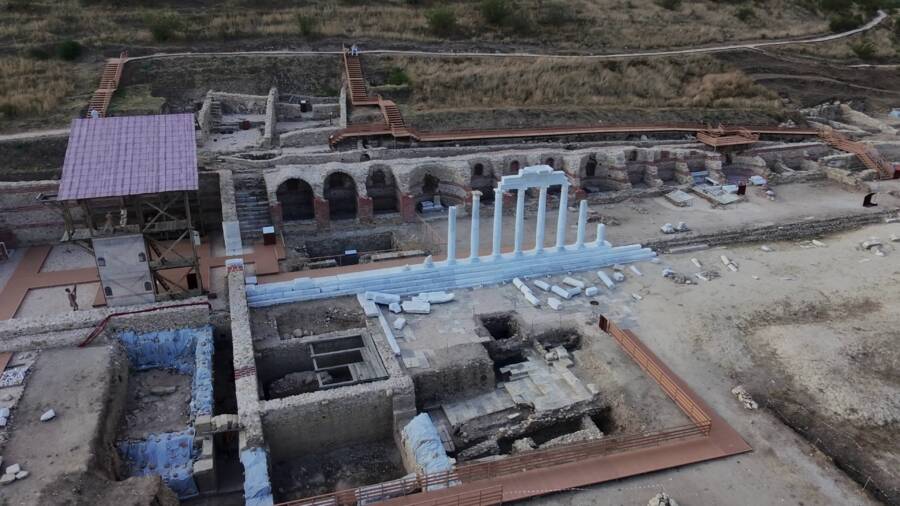
Wikimedia CommonsThe excavation site of Heraclea Sintica, an ancient city that flourished in present-day Bulgaria in the third century C.E.
This surgical instrument was known as a lithulkos and was a part of an advanced kit used by ancient surgeons to perform a lithotomy, the procedure to remove bladder stones. A surgeon would make an incision in the perineum — the area just underneath the genitals — and then remove the stones with a hooked tool, or sometimes even their fingers.
This operation was performed mainly in ancient times, as less invasive methods were developed in the following centuries, ones that crushed bladder stones rather than removed them via surgery.
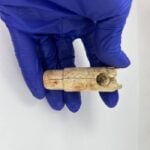
The surgical tool found in Bulgaria once had its hooked tips on its working end, but these did not survive. However, the archaeologists did find the instrument’s bronze handle, adorned with several embossed rings, which remained well-preserved.
Researchers hope that this rare discovery will shed more light on both medical advancements made during the early centuries C.E., as well as Heraclea Sintica’s place in the ancient medical world.
“The instrument is an extremely rare find not only for Bulgaria, but also worldwide,” Vagalinski said. “From the available scientific literature, only one other similar discovery is known in Italy.”
The Scourge Of Bladder Stones In The Ancient World
According to Vagalinski, ancient writers, like the Roman Pliny the Elder, described bladder stones as one of the ancient world’s most painful and dire medical conditions. Meanwhile, the Greek physician Ammonius of Alexandria, who lived in the third century B.C.E., was known for devising surgical procedures and instruments for operations that would remove bladder stones. His contributions to the field earned him the nickname “Lithotomos” or “The Stone Cutter.”

Wikimedia CommonsThe Hippocratic Oath mentions bladder stone removal surgery, and urges the surgery to be left to physicians with proper training.
While other, less specialized surgical tools have been found and identified by archaeologists — such as scalpels, needles, curettes, and spoons — researchers believe that tools like the lithulkos were rarer among ancient physicians.
Bladder stone surgery is even mentioned in the Hippocratic Oath, written by Hippocrates circa the fourth or fifth century B.C.E. The ancient Greek text states: “I will not cut for stone, even for the patients in whom the disease is manifest; I will leave this operation to be performed by practitioners.”
This indicates that lithotomy was seen in ancient times as a very advanced procedure, only to be done by the most well-trained medical professionals.
What This Discovery Could Reveal About Ancient Life In Heraclea Sintica
This surely means, then, that some of these specialized medical professionals were living in Heraclea Sintica during the third century C.E., the period from which the newly-unearthed tool comes. During this century, the ancient city was also experiencing major economic growth as part of the Roman Empire.

Supa Ant Canning Supplies Starter Kit (Food Grade) - Canning Kits Set for Beginners - 3 Pcs. Including Wide Mouth Jar Funnel, Magnetic Lid Lifter, Stainless Steel Jar Lifter (Assembled in USA) Blue
$9.99 (as of October 25, 2026 01:02 GMT +00:00 - More infoProduct prices and availability are accurate as of the date/time indicated and are subject to change. Any price and availability information displayed on [relevant Amazon Site(s), as applicable] at the time of purchase will apply to the purchase of this product.)
RIVER OF GOODS Coastal 52 Inch Wooden Bead LED Ceiling Fan, Cream
(as of October 25, 2026 01:02 GMT +00:00 - More infoProduct prices and availability are accurate as of the date/time indicated and are subject to change. Any price and availability information displayed on [relevant Amazon Site(s), as applicable] at the time of purchase will apply to the purchase of this product.)
White Leaf Baby Food Pouches, Toddler Snack, Mango + Carrot + Banana + Pear | 24 Pack, Organic No Added Sugar, Non-GMO, BPA-Free Regeneratively Farmed, Squeeze Puree Smoothie Pouch for Adults & Children
$69.95 (as of October 25, 2026 01:02 GMT +00:00 - More infoProduct prices and availability are accurate as of the date/time indicated and are subject to change. Any price and availability information displayed on [relevant Amazon Site(s), as applicable] at the time of purchase will apply to the purchase of this product.)
RIVER OF GOODS Stained Glass Magna Carta LED Ceiling Fan - 52" L x 52" W - Tiffany Style - Flush Mount Ceiling Fan with Remote - Teal
(as of October 25, 2026 01:02 GMT +00:00 - More infoProduct prices and availability are accurate as of the date/time indicated and are subject to change. Any price and availability information displayed on [relevant Amazon Site(s), as applicable] at the time of purchase will apply to the purchase of this product.)