Unlock These 62 Uplifting Stories That Will Instantly Brighten Your Day—You Won’t Believe #17!

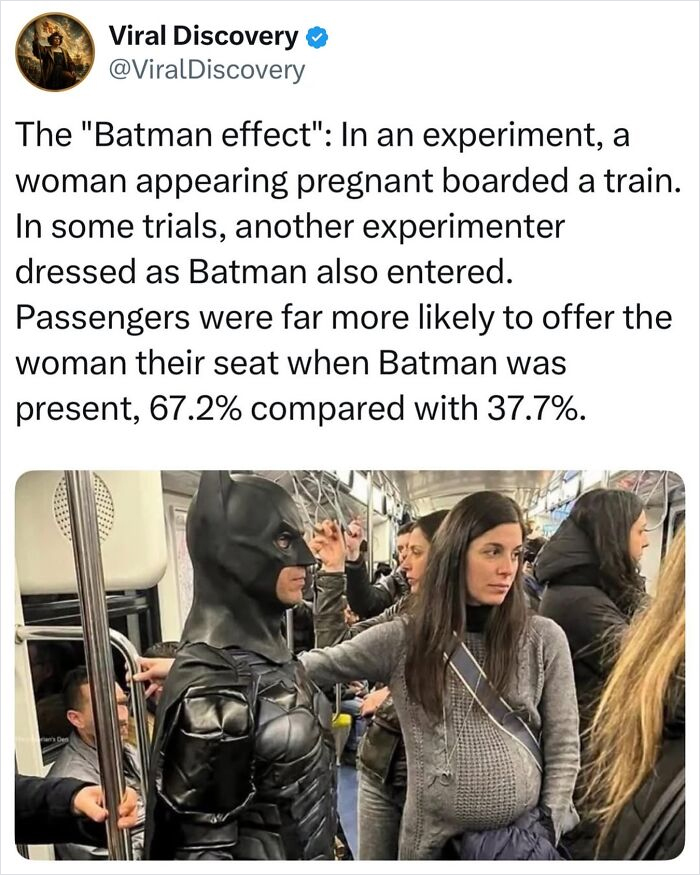 This Italian metro experiment is real, published in npj Mental Health Research.Researchers tested how disruptions alter public kindness using a fake pregnant passenger. In normal settings, commuters offered her a seat 37.7% of the time. When Batman entered another door, compliance surged to 67.2%. Psychologists believe the bizarre sighting jolted riders out of their mental autopilot.
Their careful record-keeping included more than just court events. Officials wrote down who compiled the annals, how long it took, and even when workers aired out the books to keep them safe. Even kings could not read these records freely, which helped historians stay independent when writing about royal decisions.
 In the early 2000s, Saudi Arabia’s highways hosted a dangerous, illegal drifting subculture known as hajwalah. Drivers modified everyday sedans and SUVs to perform high-speed stunts like balancing vehicles on two wheels while passengers hung out of the windows. Harsh penalties and police crackdowns eventually suppressed the underground scene.
 Hubert Reeves highlights a profound irony in human behavior by pointing out how we praise abstract spiritual entities while simultaneously damaging the concrete world that keeps us alive. His words serve as a sharp critique of environmental destruction, suggesting that people fail to see the sacred value in the natural world.
By separating spiritual devotion from physical reality, humanity actively poisons the air, water, and ecosystems that provide life. Ultimately, this perspective argues that nature itself is the true force deserving of our reverence, and destroying it is an act of self-sabotage that undermines the very essence of what many claim to worship.
 I thought we were over hunting for tusks?!!
“Tusk hunting” usually refers to the pursuit of elephants, walruses, or wild boars specifically for their tusks — prized for ivory, status symbols, weapons, or trade. In the 19th and early 20th centuries, ivory hunters traveled deep into African forests and savannas, facing dangerous wildlife, disease, and harsh terrain in search of massive elephant tusks that could weigh over 100 pounds each.
The hunt became one of the most controversial wildlife practices in history because the global ivory trade devastated elephant populations. Today, many countries ban ivory trading, and conservation groups work to protect elephants from poaching. Modern discussions about tusk hunting often center on wildlife conservation, ethics, and the balance between human traditions and endangered species protection.
Photography soon became more than just an artistic novelty. People could save images of faces, buildings, landscapes, and important moments without needing someone to draw or paint them. As technology improved, photos became easier to make and share, helping future generations see people and places from the past.
 Yale University’s Beinecke Rare Book & Manuscript Library houses the Mellon Alchemy Collection, one of the world’s most extensive archives of rare texts dedicated to alchemy, astrology, and the occult. Viral social media posts frequently frame this archive as a hidden vault of “forbidden magic books” once banned by religious authorities. The vast collection contains over 300 medieval and Renaissance manuscripts—including original alchemical formulas studied by Sir Isaac Newton—which were curated in the 1940s by Mary Conover Mellon, who was deeply inspired by psychiatrist Carl Jung’s psychological theories on mystical symbolism.
While internet memes dramatically hype up these archives as dark spellbooks, historians view them as priceless windows into early scientific imagination from a time when the boundaries between chemistry, medicine, and magic were blurred. The collection features heavily guarded historical treasures like the 20-foot-long Ripley Scroll, which utilizes intricate illustrations to cryptically map out the creation of the legendary Philosopher’s Stone. Rather than keeping them locked away in a secret occult sanctuary, Yale has actually digitized the vast majority of the collection, allowing the public to freely explore these formerly “forbidden” texts online.

RIVER OF GOODS LED Boho Ceiling Fan with Hand Woven Brown/Natural Rope - Macrame Knot Work and Hemp Rope Style Eclectic Cottage Decor - 52" L x 52" W - Rich Barnwood/Light Driftwood Fan Blades
(as of November 3, 2026 01:06 GMT +00:00 - More infoProduct prices and availability are accurate as of the date/time indicated and are subject to change. Any price and availability information displayed on [relevant Amazon Site(s), as applicable] at the time of purchase will apply to the purchase of this product.)
The Door Balancer Eliminates The Need for Door Props, Door Stops and Door Wedges
(as of November 3, 2026 01:06 GMT +00:00 - More infoProduct prices and availability are accurate as of the date/time indicated and are subject to change. Any price and availability information displayed on [relevant Amazon Site(s), as applicable] at the time of purchase will apply to the purchase of this product.)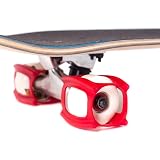
Skater Trainer Wheels - Beginners get Skateboard Tricks Fast, Safe and Fun | Viral accessory gift - Helps beginners stay excited about their new skateboard - Kids & parents love these
$28.99 (as of November 3, 2026 01:06 GMT +00:00 - More infoProduct prices and availability are accurate as of the date/time indicated and are subject to change. Any price and availability information displayed on [relevant Amazon Site(s), as applicable] at the time of purchase will apply to the purchase of this product.)
1MORE Triple Driver in-Ear Earphones Hi-Res Headphones with High Resolution, Bass Driven Sound, MEMS Mic, in-Line Remote, High Fidelity for Smartphones/PC/Tablet - Silver
$69.99 (as of November 3, 2026 01:06 GMT +00:00 - More infoProduct prices and availability are accurate as of the date/time indicated and are subject to change. Any price and availability information displayed on [relevant Amazon Site(s), as applicable] at the time of purchase will apply to the purchase of this product.)



















Post Comment