19 Secrets Kids Hide: What They Pretend to Understand but Actually Don’t
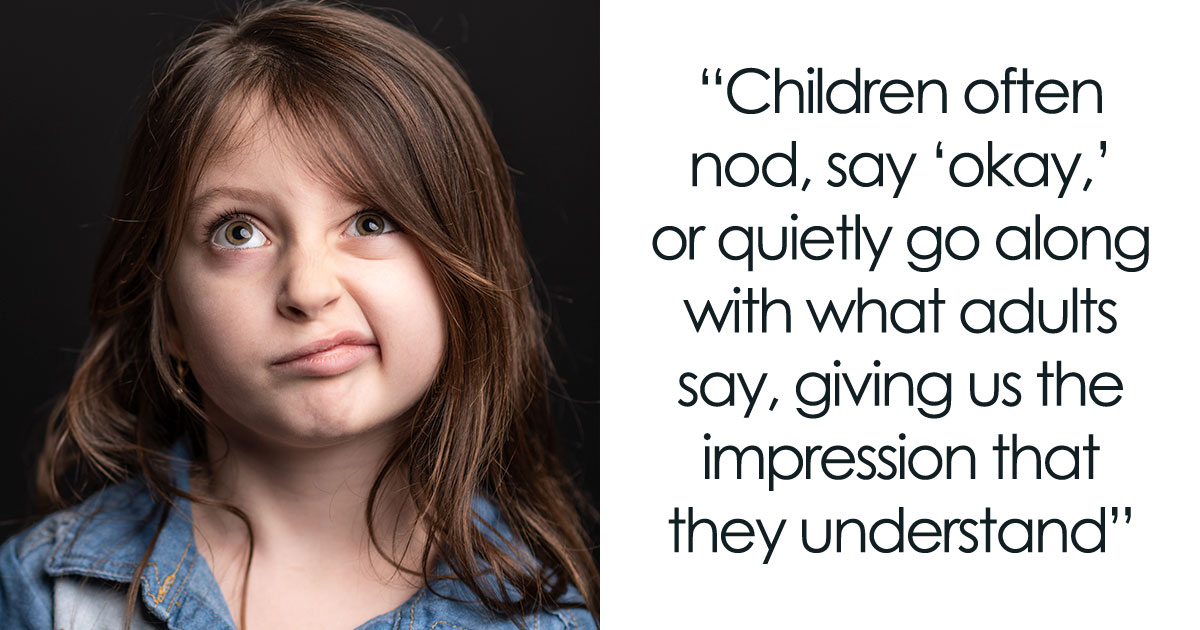
If children are repeatedly reminded to “be good,” they may begin to associate mistakes or challenging behavior with being a bad person. Children benefit from specific expectations rather than labels. Instead of “Be good at Grandma’s house,” try, “Use your inside voice, keep your feet on the floor, and ask Grandma before taking anything.”
Specific expectations give children something they can understand and accomplish.
As the expert emphasized: “The goal is not simply to raise children who follow directions. It is to raise children who genuinely understand and feel safe enough to tell us when they do not.”
Specific encouragement gives children more information:
“You kept trying even when that was difficult.”
“I noticed that you shared with your brother.”
“You remembered to put your shoes away without being reminded.”
Compliments can become even more confusing when praise is immediately followed by criticism: “You did a great job cleaning your room, BUT you left a shirt in the corner.”
The parent may believe they offered both a compliment and helpful feedback. But the child may hear, “It still wasn’t good enough.”
The word “but” can erase everything that came before it. Instead of feeling proud that they completed a big task, the child’s attention immediately shifts to the one thing they missed. That compliment has now become criticism.
Try allowing the compliment to stand on its own: “You worked hard cleaning your room. Look how much you accomplished!”
If the forgotten shirt needs attention, address it separately: “There’s one shirt left in the corner. Where does that belong?”
A compliment does not have to mean everything was perfect. It can simply mean we noticed the effort, growth, or accomplishment.
Depending on the child’s age, they may still be very young. Even older children sometimes need reassurance, connection, and support.
Children may understand that the adult disapproves of their reaction without understanding what they are expected to do instead.
Rather than criticizing the emotion, teach the skill, “I can see that you’re upset. Tell me what happened.”
“Let’s take a breath together and figure out what you need.”
Children grow through guidance and coaching, not shame.
A mother of five in a successfully blended family for more than 30 years and a grandmother of nine, Celia combines decades of professional experience with real-life parenting wisdom. Her mission is to help 50 million parents stop yelling at their children and create childhoods their children can blossom from, not recover from.
A child who is angry, embarrassed, disappointed, jealous, frightened, or overwhelmed may not yet have the emotional vocabulary to explain what is happening inside them.
Instead of only saying, “Use your words,” offer language, “Are you angry because your brother took the toy?”
“You can say, ‘I’m still using that. Can I have it back?’”
Children cannot consistently use language they have never been taught or don’t have full command of yet. Emotional vocabulary develops through modeling, practice, and repetition.







WIN $500 OF SHOPPING!
This will close in 0 seconds