44 Incredible Moments You Won’t Believe Are Happening Right Now Around the World

Imagine spending seven long years tinkering away, fueled not by patent dreams or market trends but by a simple desire to ease your mother’s daily pain. That’s exactly what Chintakindi Mallesham did when he set out to revolutionize the tedious, shoulder-aching yarn-winding process his mother endured. No engineering degree, no fancy lab—just relentless determination, a few borrowed parts, and the love that turns hardship into innovation. His invention, named after his mother, didn’t just speed up the process; it transformed lives and even earned him one of India’s highest civilian honors. So how does one man’s mission to help family become a symbol of resilience and ingenuity? Let’s dive into Mallesham’s extraordinary journey and discover what really happened behind the scenes. LEARN MORE
 Weaver Spends Seven Years Building a Machine to Ease His Mother’s Painful Yarn-Winding Work, Then Earns India’s Padma Shri
Chintakindi Mallesham grew up watching his mother, Laxmi, spend hours preparing yarn for Pochampalli saris in India.
The process, called Asu, required thousands of repeated hand movements. Her shoulders and elbows hurt. She told him she could not keep doing it.
In 1992, at twenty, Mallesham began trying to build a machine that could help.
He had no formal engineering training. He divided the task into separate movements, bought parts when he could afford them, and kept experimenting.
His savings ran low. He moved to Hyderabad for paid electrical work and continued developing the unfinished machine. His wife, Swarna, contributed money to help him keep going.
In 1999, seven years after he started, the first machine was complete.
He named it the Laxmi Asu machine after his mother. It reduced the demanding yarn-preparation stage to about ninety minutes, while leaving the wider craft of sari making in the weavers’ hands.
In 2017, he received India’s Padma Shri. His journey later became a film.
A task his mother had endured for years became the problem he refused to leave unsolved. But what happened between those first experiments and the working machine?
 15-Year-Old Builds His Own Radio Station From Discarded Parts, Then Takes His Ideas From Sierra Leone to MIT
At fifteen, Kelvin Doe was broadcasting to his community in Sierra Leone through an FM transmitter he had built from salvaged electronics.
On air, he called himself DJ Focus. He played music and shared local news, bringing schoolmates into the project to help gather stories from their neighborhood.
His experiments began with an everyday frustration: batteries for radios and flashlights were expensive. So he taught himself to make his own using discarded materials. He also built a generator.
In 2012, his work caught the attention of David Moinina Sengeh, a Sierra Leonean doctoral student at MIT who helped run the Innovate Salone competition.
Sengeh arranged a trip to the United States. That October, Kelvin spent time working alongside people at the MIT Media Lab and presented at New York’s World Maker Faire.
Here’s another remarkable detail: the schoolmates helping him gather news were, on average, just twelve years old.
A teenager’s experiments had become a project other young people could contribute to.
But the invitation to MIT came after the hardest part had already begun. How did Kelvin turn discarded pieces into a working transmitter, and who helped his ideas reach beyond his neighborhood?
 A Business Student and Three Classmates Develop a Sleeping-Bag-Style Warmer That Has Helped Keep Over 1.4 Million Newborns Warm, According to Embrace Global
While studying at Stanford, Jane Chen’s team received a challenge: design a baby incubator for less than one percent of the usual cost.
Their research pointed toward something portable that could provide warmth without a continuous electricity supply.
The answer looked more like a tiny sleeping bag than a hospital machine.
Inside was a pouch of specially designed, wax-like material. After heating, it releases warmth as it slowly becomes solid again.
Embrace says the pouch can provide warmth for up to four to six hours before needing reheating. It supports temperature care, rather than replacing every function of a hospital incubator.
One intriguing detail: the same pouch can be reheated hundreds of times.
Since 2011, Embrace Global reports helping keep more than 1.4 million newborns warm across over 30 countries.
What began as a class assignment grew through conversations with parents, doctors and healthcare workers.
But why does the pouch release warmth gradually instead of simply cooling down like a hot-water bottle?
According to psychologists, being constantly exposed to negative news can take an emotional toll on you, contributing to stress and anxiety. Staying informed matters, but you don’t have to spend every waking moment absorbing everything that’s going wrong.
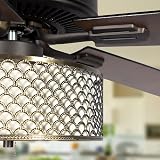
RIVER OF GOODS Mid-Century Modern Transitional LED Bronze Chrome Ceiling Fan - 52" L x 52" W - Rich Barnwood/Light Driftwood Fan Blades - Metallic Ceiling Fan with Light and Fabric Shade
(as of November 5, 2026 01:06 GMT +00:00 - More infoProduct prices and availability are accurate as of the date/time indicated and are subject to change. Any price and availability information displayed on [relevant Amazon Site(s), as applicable] at the time of purchase will apply to the purchase of this product.)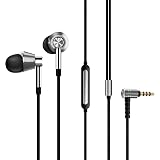
1MORE Triple Driver in-Ear Earphones Hi-Res Headphones with High Resolution, Bass Driven Sound, MEMS Mic, in-Line Remote, High Fidelity for Smartphones/PC/Tablet - Silver
(as of November 5, 2026 01:06 GMT +00:00 - More infoProduct prices and availability are accurate as of the date/time indicated and are subject to change. Any price and availability information displayed on [relevant Amazon Site(s), as applicable] at the time of purchase will apply to the purchase of this product.)
Kinsa Smart,Fever, Digital Medical Baby, Kid and Adult Termometro - Accurate, Fast, FDA Cleared Thermometer for Oral, Armpit or Rectal Temperature Reading - QuickCare
$18.94 (as of November 5, 2026 01:06 GMT +00:00 - More infoProduct prices and availability are accurate as of the date/time indicated and are subject to change. Any price and availability information displayed on [relevant Amazon Site(s), as applicable] at the time of purchase will apply to the purchase of this product.)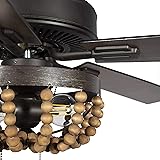
RIVER OF GOODS Coastal 52 Inch Wooden Bead LED Ceiling Fan, Brown
(as of November 5, 2026 01:06 GMT +00:00 - More infoProduct prices and availability are accurate as of the date/time indicated and are subject to change. Any price and availability information displayed on [relevant Amazon Site(s), as applicable] at the time of purchase will apply to the purchase of this product.)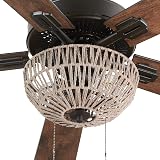




















Post Comment