44 Incredible Moments You Won’t Believe Are Happening Right Now Around the World

Her experiments explored photocatalysis, a process in which light helps a suitable material drive chemical reactions.
The research developed into a composite designed to break down certain organic substances and inactivate bacteria.
In 2012, she won the Young Scientist Challenge grand prize. Later, her work earned recognition from the EPA through the President’s Environmental Youth Award.
One intriguing detail: researchers must test different contaminants separately. Reducing bacteria does not automatically mean every harmful substance has been removed.
Her project remained research requiring further testing, but it showed how concern for others could become a question worth investigating.
What happens when light reaches that specially designed material, and how can it help treat water?
Discover the science behind Deepika’s experiments and the steps between a promising result and dependable clean water. Read More… https://trendingamerican.com/deepika-kurup-sunlight-water-purification-research/.
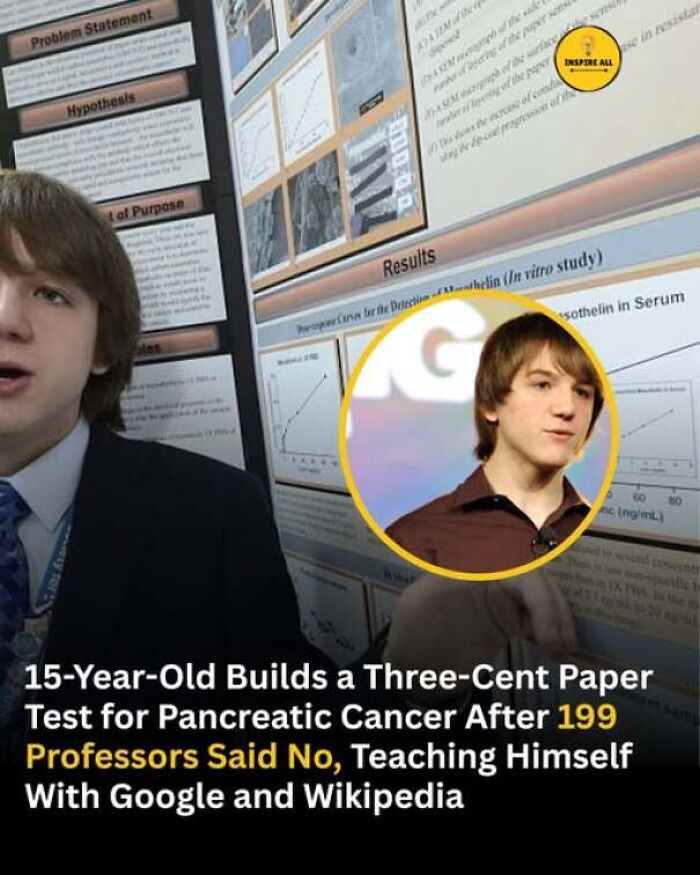 A 15-Year-Old Develops an Experimental Sensor for Pancreatic-Cancer Research and Wins a Major Science Prize
Jack Andraka wanted to investigate a disease that had affected someone close to his family.
He began reading about pancreatic cancer and exploring whether a paper-based sensor could help detect a protein associated with it.
His project combined paper, carbon nanotubes and antibodies, turning his research into something he could test.
In 2012, at 15, he won the top award at the Intel International Science and Engineering Fair, earning the $75,000 Gordon E. Moore Award.
One important detail: the sensor targeted a protein called mesothelin. Detecting that protein is different from proving that a test can reliably find cancer in patients.
His achievement was an award-winning research project, not a clinically validated screening test.
That distinction leaves plenty to appreciate: a teenager pursued a difficult question and developed an experiment that earned major recognition.
But how could a piece of paper detect a protein, and what would researchers need to prove before such a sensor could help patients?
Discover the science behind Jack’s project, and what the viral headlines leave out. Read More… https://trendingamerican.com/jack-andraka-2012-experimental-cancer-sensor/.
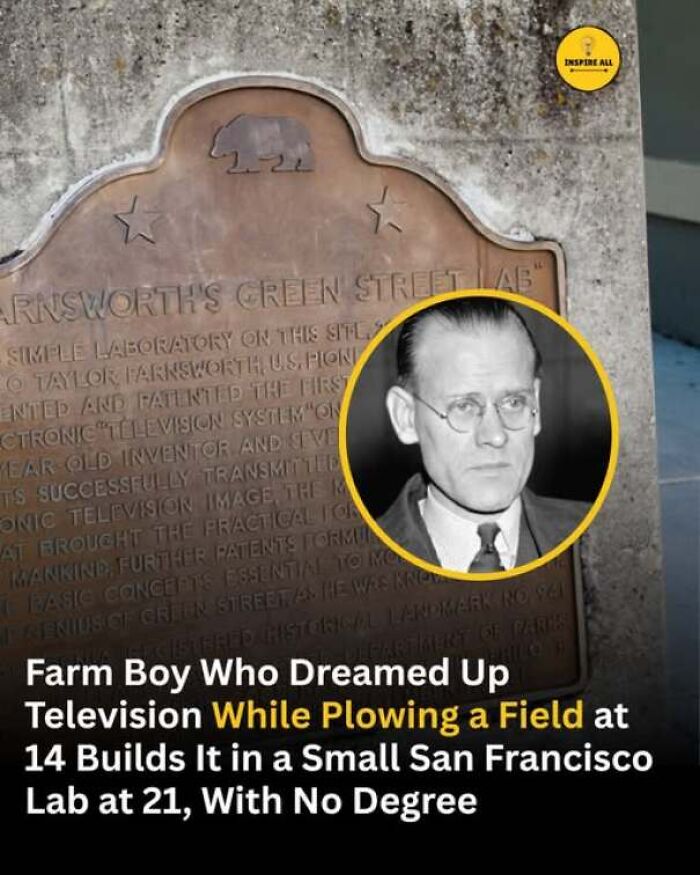 A Farm Boy Gets an Idea While Plowing a Field at 14, Then Helps Build Electronic Television at 21
Philo Farnsworth saw something in the rows of a field that reached far beyond farming.
According to the account preserved by his wife, the straight furrows suggested a way to scan a picture: one line at a time.
In 1922, he explained his idea to his high-school chemistry teacher.
Turning it into a working system took years of experiments and help from others. His wife, Pem, contributed to the laboratory work, while her brother learned glassblowing to make the tubes they needed.
On September 7, 1927, their San Francisco team transmitted an electronic image from one room to another.
It was a single straight line.
That modest image marked a major step in the development of electronic television.
One remarkable detail: an experimental image-dissector tube Farnsworth made in 1927 survives in the Smithsonian’s collection.
His story connects a teenage observation with the patient work of building something that could prove it.
But how could rows in a field suggest a way to send a picture through wires?
Discover the idea behind that first simple image, and the people who helped bring it to life.
Read More… [https://trendingamerican.com/philo-farnsworth-electronic…/](https://trendingamerican.com/philo-farnsworth-electronic-television-farm-boy/?fbclid=IwZXh0bgNhZW0CMTAAcGRvZgNicmlkETFvRFRMN3duUW5lSWFYNjc3c3J0YwZhcHBfaWQPNTE0NzcxNTY5MjI4MDYxAAEfbcOrIMWzwVAPFP_qQ7rFk1Iq5uwBGvUTZ3-_1DvUyGBwwr-l43eBSDkjWb0_aem_H_becvSlFshO3xKeI_JA0g).
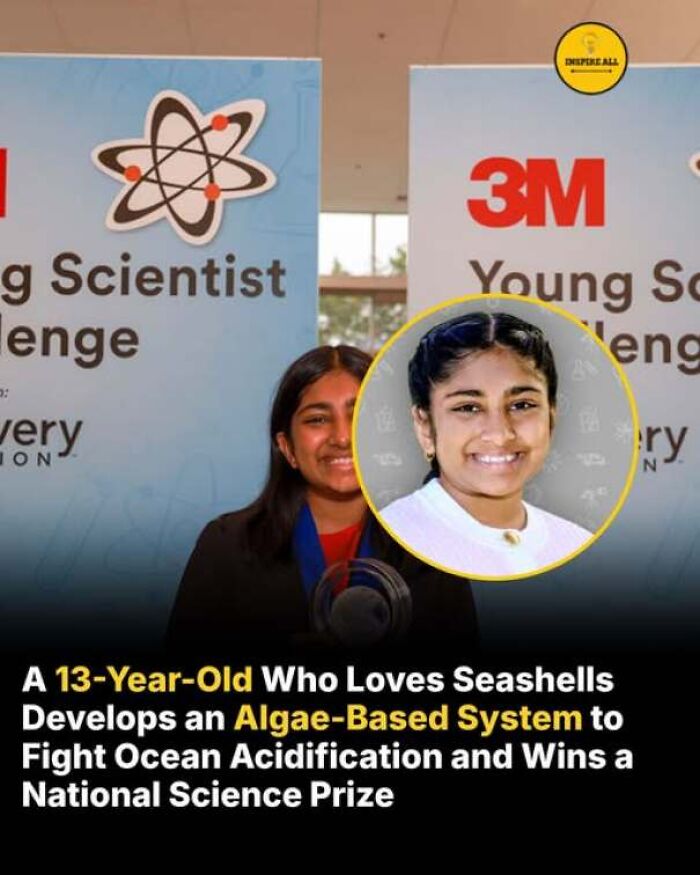 A 13-Year-Old Who Loves Seashells Develops an Algae-Based System to Fight Ocean Acidification and Wins a National Science Prize
Raji Doshi loved collecting seashells. Learning that changing ocean chemistry could harm shells and the creatures inside them gave that interest a new direction.
She began exploring a question: could algae and a natural mineral work together to help?
Her experimental system pairs algae with aragonite, a form of calcium carbonate, to investigate ways of reducing dissolved carbon dioxide and countering acidification.
With guidance from 3M mentor Deborah Isabelle, Raji developed experiments and a computer model to explore how much mineral the system should use.
In October 2026, she won the 3M Young Scientist Challenge and its $25,000 grand prize.
Here’s an intriguing detail: ocean water is still alkaline on average. Even a shift toward greater acidity can make it harder for marine creatures to build their shells.
Her project remains experimental, with more testing needed before wider coastal use. But a familiar childhood interest had become a reason to measure, investigate and keep asking questions.
RIVER OF GOODS LED Boho Ceiling Fan with Hand Woven Brown/Natural Rope - Macrame Knot Work and Hemp Rope Style Eclectic Cottage Decor - 52" L x 52" W - Rich Barnwood/Light Driftwood Fan Blades
(as of November 5, 2026 01:06 GMT +00:00 - More infoProduct prices and availability are accurate as of the date/time indicated and are subject to change. Any price and availability information displayed on [relevant Amazon Site(s), as applicable] at the time of purchase will apply to the purchase of this product.)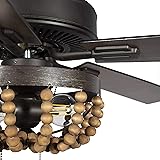
RIVER OF GOODS Coastal 52 Inch Wooden Bead LED Ceiling Fan, Brown
(as of November 5, 2026 01:06 GMT +00:00 - More infoProduct prices and availability are accurate as of the date/time indicated and are subject to change. Any price and availability information displayed on [relevant Amazon Site(s), as applicable] at the time of purchase will apply to the purchase of this product.)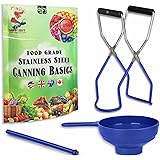
Supa Ant Canning Supplies Starter Kit (Food Grade) - Canning Kits Set for Beginners - 3 Pcs. Including Wide Mouth Jar Funnel, Magnetic Lid Lifter, Stainless Steel Jar Lifter (Assembled in USA) Blue
$9.99 (as of November 5, 2026 01:06 GMT +00:00 - More infoProduct prices and availability are accurate as of the date/time indicated and are subject to change. Any price and availability information displayed on [relevant Amazon Site(s), as applicable] at the time of purchase will apply to the purchase of this product.)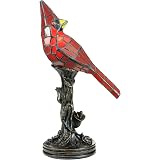
RIVER OF GOODS Stained Glass Bird Accent Lamp - 8" W x 13.5" H - Tiffany Style Table Lamps for Home, Office Desk, Bedroom, Nightstand - Blue Jay Decor
(as of November 5, 2026 01:06 GMT +00:00 - More infoProduct prices and availability are accurate as of the date/time indicated and are subject to change. Any price and availability information displayed on [relevant Amazon Site(s), as applicable] at the time of purchase will apply to the purchase of this product.)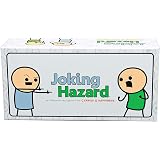


















Post Comment