44 Incredible Moments You Won’t Believe Are Happening Right Now Around the World

The exact spider species responsible for this incredible formation is difficult to identify from the web alone. It could even be the work of several spiders rather than one giant web-builder.
Nature has a way of transforming the most ordinary places into something extraordinary. What looks spooky to us may be a perfectly functioning hunting ground for tiny creatures living right under our noses.
**Would you find this fascinating or terrifying if you discovered it in your garden?**.
 Village Postman Spends 33 Years Building a Palace From Stones He Collected on His Rounds, Bringing Them Home in a Wheelbarrow
In April 1879, a 43-year-old French postman stumbled over an unusually shaped stone.
Ferdinand Cheval picked it up. That small discovery became the beginning of a project that would occupy the next 33 years of his life.
He had limited schooling and no architectural training. But as he walked his postal rounds through the countryside, he collected stones and brought them home.
Piece by piece, he built an extraordinary palace in his garden in Hauterives, France.
It grew into a world of towers, animals, giants and grotto-like spaces. His postal work supplied another unexpected source of inspiration: the postcards and illustrated publications that showed him places beyond his village.
By 1912, his Palais Idéal was complete.
Here’s an intriguing detail: despite its name, the palace was never intended to be a normal home. Cheval had spent decades building a place for his imagination.
In 1969, France recognized it as a historic monument.
One stone became a wheelbarrow full. Years became decades. A postman’s private project became something a country chose to preserve.
But what made that first stone so remarkable that he kept building for 33 years?
Read More… https://trendingamerican.com/ferdinand-cheval-postman-palais-ideal-stones/.
 An Alabama Property Developer Watched a Streetcar Driver Struggle in the Snow, Invented a Windshield Wiper, and Was Told It Had Little Commercial Value
In the early 1900s, Mary Anderson was visiting New York when she noticed a streetcar driver repeatedly stopping to clear snow and sleet from his window.
Back home in Birmingham, she designed a simple solution: a lever inside the vehicle that moved a rubber blade across the glass outside. The driver could clear the window without stepping into the weather.
She received her patent on November 10, 1903. But when she approached a Canadian firm in 1905, it declined. The company did not see enough commercial value in her idea.
Anderson’s background made the invention even more unexpected. Alongside managing property, she had operated a cattle ranch and vineyard in California.
Her wiper never entered production. Her patent expired in 1920. Two years later, Cadillac began installing windshield wipers as standard equipment.
Recognition finally came in 2011, when she entered the National Inventors Hall of Fame, 58 years after her d***h.
She had spotted a problem millions of drivers would eventually understand. So why was such a practical idea so difficult to sell?
Read More… https://trendingamerican.com/mary-anderson-1903-windshield-wiper-invention/.
 A Professor Launches the World’s First Liquid-Fueled Rocket From a Snowy Farm, Six Years After a Newspaper Questioned His Understanding of Physics
On March 16, 1926, Robert Goddard tested a rocket in a field in Auburn, Massachusetts.
It used gasoline and liquid oxygen. The flight lasted just 2.5 seconds, reached 41 feet high and ended 184 feet away in a cabbage patch.
Those few seconds marked the world’s first successful liquid-fueled rocket flight.
Six years earlier, The New York Times had mocked his suggestion that rockets could reach the Moon, questioning how one could work without air to push against.
Goddard continued experimenting.
His wife Esther, assistant Henry Sachs and fellow professor Percy Roope were part of the small group associated with the farm test.
One remarkable detail: NASA named Goddard Space Flight Center in his honor in 1959, decades after that brief flight.
His achievement grew through building, measuring and improving an idea whose significance was not yet widely understood.
But a rocket really does need something to push against, doesn’t it?
Discover the physics behind the newspaper’s mistake, and why a flight ending in a cabbage patch became a milestone in space history. Read More… https://trendingamerican.com/robert-goddard-first-liquid-fueled-rocket-1926/.
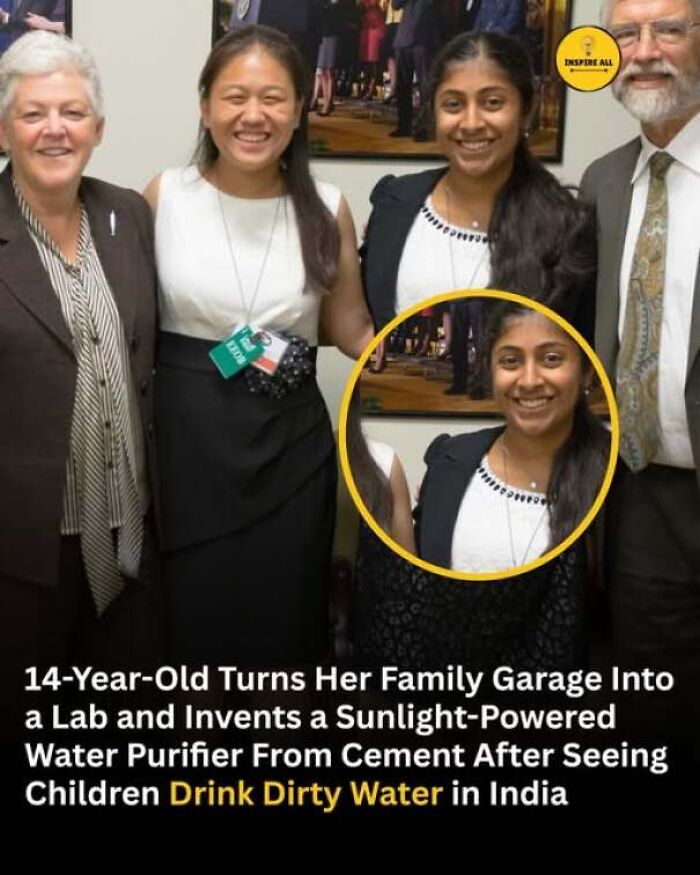 A Teenager Sees Children Drinking Unsafe Water, Then Begins Developing a Sunlight-Powered Treatment Method
During a visit to her grandparents in India, Deepika Kurup saw children drinking water she considered unsafe.
The experience stayed with her.
At 14, she began investigating whether sunlight and a specially designed material could help treat contaminated water.
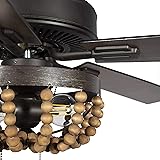
RIVER OF GOODS Coastal 52 Inch Wooden Bead LED Ceiling Fan, Brown
(as of November 5, 2026 01:06 GMT +00:00 - More infoProduct prices and availability are accurate as of the date/time indicated and are subject to change. Any price and availability information displayed on [relevant Amazon Site(s), as applicable] at the time of purchase will apply to the purchase of this product.)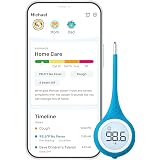
Kinsa Smart,Fever, Digital Medical Baby, Kid and Adult Termometro - Accurate, Fast, FDA Cleared Thermometer for Oral, Armpit or Rectal Temperature Reading - QuickCare
$18.94 (as of November 5, 2026 01:06 GMT +00:00 - More infoProduct prices and availability are accurate as of the date/time indicated and are subject to change. Any price and availability information displayed on [relevant Amazon Site(s), as applicable] at the time of purchase will apply to the purchase of this product.)
RIVER OF GOODS LED Boho Ceiling Fan with Hand Woven Brown/Natural Rope - Macrame Knot Work and Hemp Rope Style Eclectic Cottage Decor - 52" L x 52" W - Rich Barnwood/Light Driftwood Fan Blades
(as of November 5, 2026 01:06 GMT +00:00 - More infoProduct prices and availability are accurate as of the date/time indicated and are subject to change. Any price and availability information displayed on [relevant Amazon Site(s), as applicable] at the time of purchase will apply to the purchase of this product.)
Supa Ant 6x8ft. Welding Blanket Fireproof (Pack of 2) - Heavy Duty Weld Fire Blanket Tools - Welders Cover for Men Curtain with Gloves - Large Welding Gear for Welder Accessories
(as of November 5, 2026 01:06 GMT +00:00 - More infoProduct prices and availability are accurate as of the date/time indicated and are subject to change. Any price and availability information displayed on [relevant Amazon Site(s), as applicable] at the time of purchase will apply to the purchase of this product.)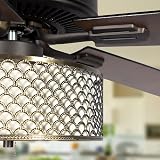



















Post Comment