Lost for a Century: The Cleopatra Sculpture Found Hidden as a Horse’s Gravestone Reveals Shocking Secrets
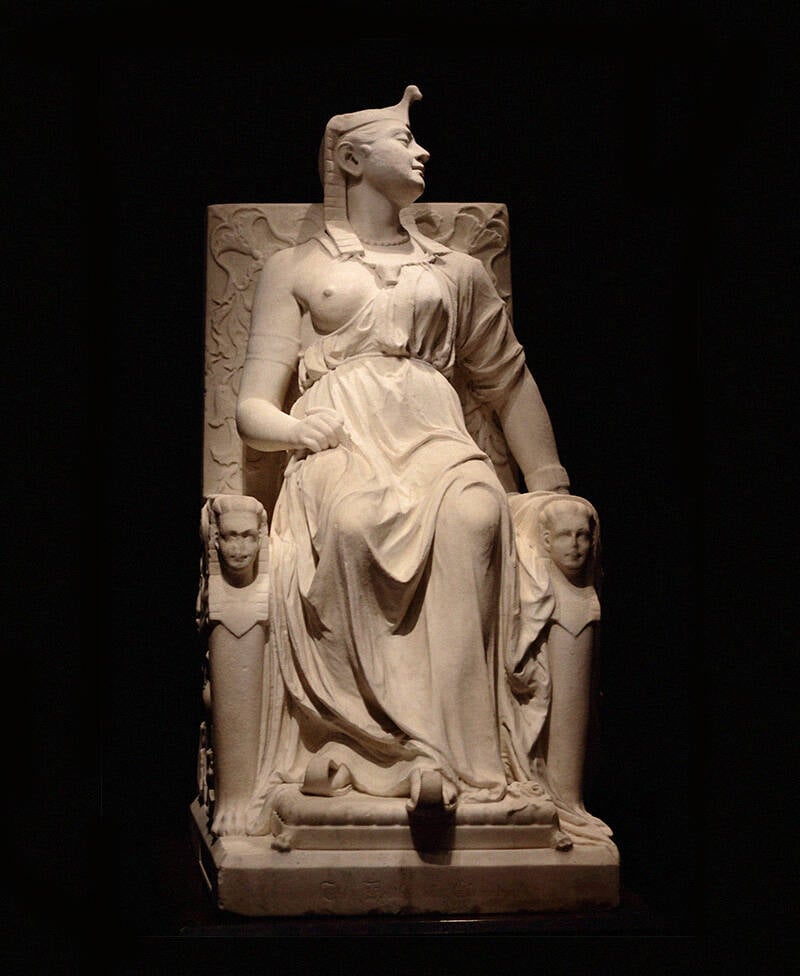
Ever wonder how a masterpiece that once stole the spotlight can just… disappear? Meet Edmonia Lewis, the trailblazing sculptor behind the 1876 sensation, The Death of Cleopatra—a marble marvel showing the queen not peacefully asleep but dead, still holding her throne like a boss. This wasn’t just art; it was a statement, crafted by a woman who battled brutal discrimination and skepticism every step of the way. For over a century, though, both her work and her name faded into the shadows—only to resurface amid a bizarre journey through saloons, horse graves, and salvage yards. How does a critically acclaimed sculpture end up as a golf course target? And why did the art world let Lewis slip into obscurity? Let’s dig into this almost-too-wild-to-believe tale of art, resilience, and rediscovery.
Edmonia Lewis’ 1876 sculpture The Death of Cleopatra received critical acclaim, but the work of art — and the artist herself — were then forgotten for over a century.
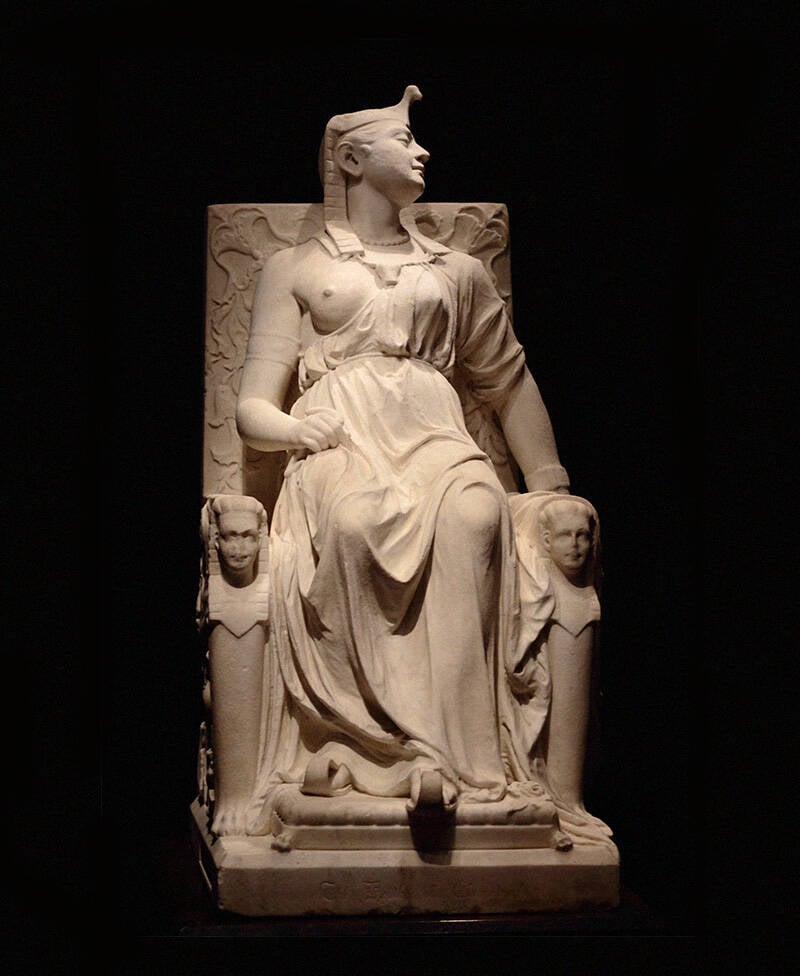
Public DomainThe Death of Cleopatra depicts the queen moments after her suicide by asp.
Many of history’s most beloved and important works have been lost to time.
Countless books, films, and works of art that were adored in their day are now destroyed or impossible to find. For example, while Sophocles was known to have written over 120 plays, only seven survive to this day. And Frida Kahlo’s 1940 painting, The Wounded Table, was last exhibited in 1955, but it has not been seen since.
One of these lost works was a sculpture called The Death of Cleopatra. At least, it was lost — until a strange series of events brought the sculpture and the artist behind it back into the limelight.
Who Was Edmonia Lewis?
In a video with over 94,000 views, TikTok user Symantha Onyechi (@ooopolish) introduces viewers to a sculpture: The Death of Cleopatra, which was created by a woman named Edmonia Lewis.
The sculpture is immediately striking. As Onyechi tells it, the sculpture shows Cleopatra “moments after her suicide.”
“Instead of showing her beautiful and peacefully asleep, [Lewis] decided to carve her dead, still seated on the throne, showing that she still had control of her fate until the very end,” the TikToker says.
But who was the sculptor behind this piece?
Edmonia Lewis was born in New York in 1844. Due to her mixed African American and Mississauga Ojibwe heritage, she faced discrimination throughout her life and career. As her fame as an artist grew, her studio received many visitors — not for viewers to see the artist at work, but to verify that it really was Lewis doing the sculpting.
“They couldn’t believe that a woman like her could create these massive marble sculptures with so much detail and realism,” Onyechi explains.
In fact, this became such a common occurrence that Lewis went out of her way to work in front of others and be seen with tools in her hands.
Lewis had studied art at Oberlin Collegiate Institute, the school that would become Oberlin College, in the early 1860s. But her time there was cut short after two horrifying incidents.
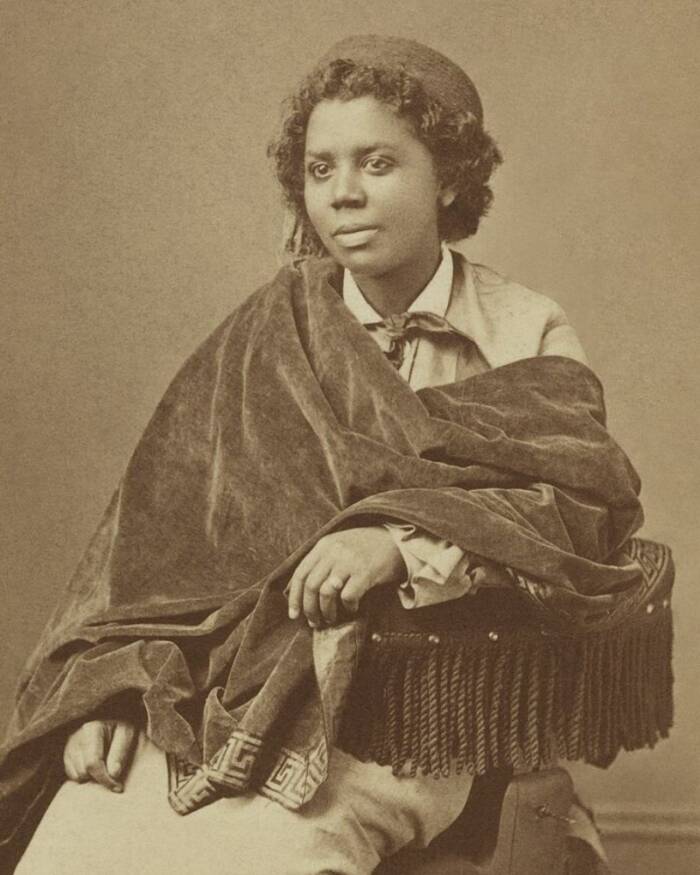
Public DomainEdmonia Lewis was largely forgotten after her death in 1907, but there has recently been renewed interest in her work.
In 1862, Lewis was accused of poisoning two white classmates. The charges were later dismissed for a lack of evidence, but as news about the event spread, Lewis was kidnapped and brutally assaulted by a white mob.
“A few years later, she left the United States and moved to Rome,” Onyechi explains. “She said that ‘the land of liberty had no room for a colored sculptor.’”
In Rome, Lewis was able to better explore her craft. Her work became popular, depicting “emancipation, freedom, Native American life, and Black history,” according to Onyechi.
Then, in 1876, Edmonia Lewis completed The Death of Cleopatra, a massive marble sculpture depicting the moments after the famed queen’s suicide. The sculpture received considerable attention at the 1876 Centennial Exhibition in Philadelphia and the 1878 Chicago Interstate Exposition — but then it seemingly vanished.
The Fate Of The Death Of Cleopatra Sculpture
Initial reports about the whereabouts of the sculpture are confusing. There are claims that, by 1892, it had somehow ended up in a saloon.
A short time later, it came into the possession of a notorious gambler and racehorse owner named “Blind John” Condon. He opted to use the sculpture as the grave marker for his favorite horse, Cleopatra, placing the sculpture near the grandstand of his race track in the Forest Park suburb of Chicago.
Over the years, the site changed, but The Death of Cleopatra remained in place. When the race track transformed into a golf course, the sculpture was used as a target. And after the U.S. Navy purchased the land to build a torpedo factory in the early years of World War II, Lewis’ sculpture was moved to a salvage yard.
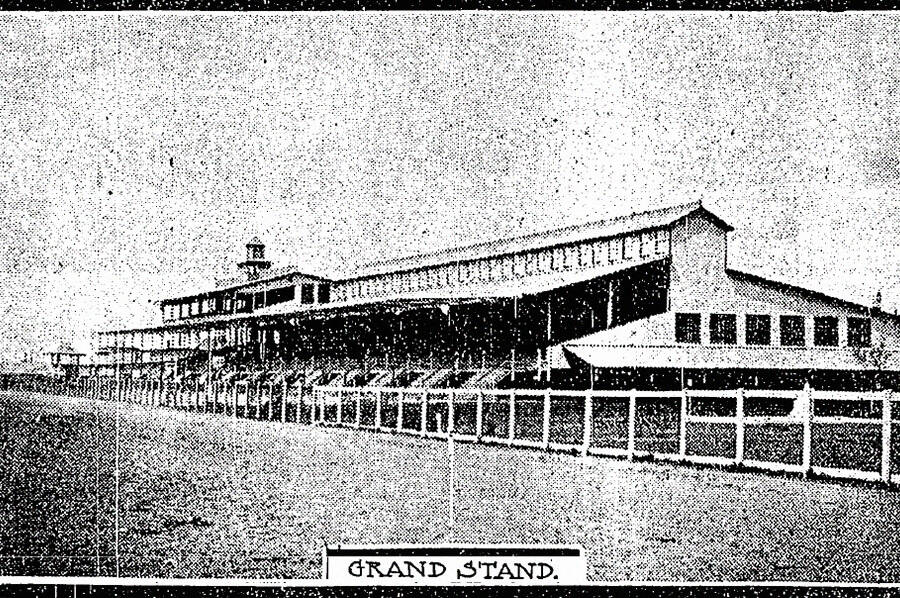
Public DomainThe Harlem Race Track in Forest Park, Illinois, in 1901.
The work of art eventually caught the eye of Harold Adams, a retired firefighter and Boy Scout troop leader. “[T]he minute I saw her, I knew that statue was something beautiful,” Adams told the Chicago Tribune in 1988. “She was like a big white ghost out there between all that heavy machinery and crying out to be saved.”

RIVER OF GOODS Coastal 52 Inch Wooden Bead LED Ceiling Fan, Brown
(as of October 18, 2026 01:00 GMT +00:00 - More infoProduct prices and availability are accurate as of the date/time indicated and are subject to change. Any price and availability information displayed on [relevant Amazon Site(s), as applicable] at the time of purchase will apply to the purchase of this product.)
RIVER OF GOODS Alabaster LED Mesh Caged Ceiling Fan - 52" L X 52" W - White/Oak Wood-Grain Blades
(as of October 18, 2026 01:00 GMT +00:00 - More infoProduct prices and availability are accurate as of the date/time indicated and are subject to change. Any price and availability information displayed on [relevant Amazon Site(s), as applicable] at the time of purchase will apply to the purchase of this product.)
Rhythm Superfoods Kale Chips, Zesty Nacho, Organic and Non-GMO, 2.0 Oz (Pack of 4), Vegan/Gluten-Free Superfood Snacks
(as of October 18, 2026 01:00 GMT +00:00 - More infoProduct prices and availability are accurate as of the date/time indicated and are subject to change. Any price and availability information displayed on [relevant Amazon Site(s), as applicable] at the time of purchase will apply to the purchase of this product.)
RIVER OF GOODS Stained Glass Magna Carta LED Ceiling Fan - 52" L x 52" W - Tiffany Style - Flush Mount Ceiling Fan with Remote - Teal
(as of October 18, 2026 01:00 GMT +00:00 - More infoProduct prices and availability are accurate as of the date/time indicated and are subject to change. Any price and availability information displayed on [relevant Amazon Site(s), as applicable] at the time of purchase will apply to the purchase of this product.)